Renewable Energy Transition: Not a Choice, but a Necessity
Today, the world is resetting the direction of energy. With energy supply chains shaken by the climate crisis and conflicts in the Middle East, securing stable energy has become a critical task. Reducing the dependence on overseas resources and transitioning to domestically producible energy have now emerged as a key strategy that determines not only industrial competitiveness but also the stability of people’s daily lives.
Among the options, renewable energy is the most practical alternative. It does not require imported raw materials and imposes less burden on the environment. The government is also accelerating the expansion of renewable energy to achieve carbon neutrality and build a sustainable future.
In this context, K-water is finding answers in water. Renewable energy accounts for approximately 21.7% of Korea’s total installed power generation capacity (153 GW) as of 2024 with K-water responsible for about 4.3%, leading the expansion of water-based renewable energy as Korea’s No. 1 renewable energy company. In particular, it is promoting the Water Energy Re:boot strategy with the goal of securing 10 GW of renewable energy capacity by 2030. From floating solar and water thermal energy to tidal power and pumped-storage hydropower, efforts to convert the potential of water into energy are now in full swing.
Energy Created from Water
The methods of water-based energy transition that K-water is working on are more diverse than expected. First, floating solar power is installed on the surface of dams or reservoirs, enabling rapid expansion without requiring the purchase of additional land. Thanks to the cooling effect of water, its power generation efficiency is about 5% higher than that of ground-mounted solar. K-water commercialized floating solar power for the first time in the world in 2012, and it is currently operating 105 MW at 7 sites. It plans to expand the cumulative capacity to 6.5 GW by 2030.
Water thermal energy has recently drawn attention as well with the rapid growth of data centers driven by the Fourth Industrial Revolution and the digital economy. Water is cooler than air in summer and warmer in winter, and this temperature difference is used for heating and cooling. It is particularly effective for facilities such as data centers generating large amounts of heat. Above all, water thermal energy serves as key infrastructure that can sustainably meet the enormous electricity and cooling demands of data centers while supporting the government’s AI transformation and data center decentralization policy.
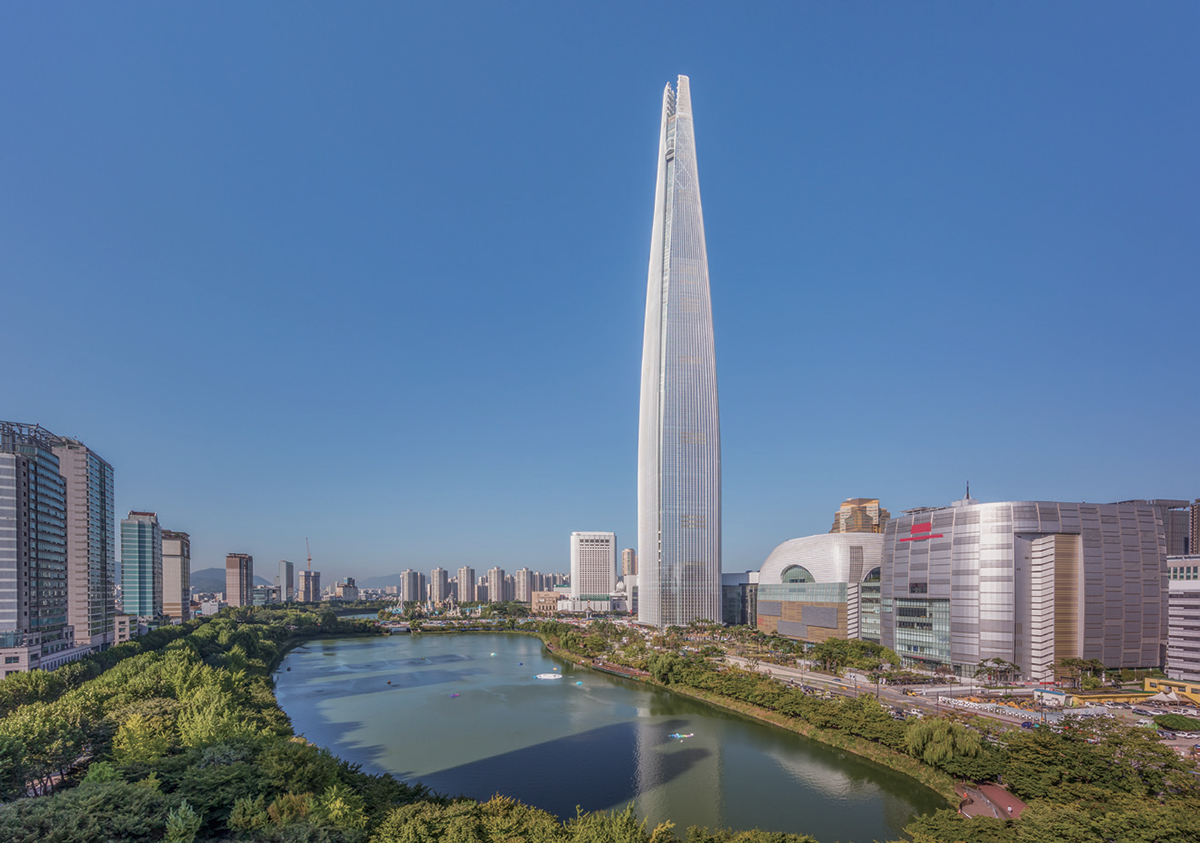
The Gangwon Water Thermal Energy Cluster being developed by K-water uses deep water drawn from dams to cool data centers, with the warmed water reused for heating smart farms. This creates a circular system, and it is expected to reduce energy consumption by up to 64%. K-water also operates water thermal energy facilities at 41 sites with total capacity of 50.5 MW including Lotte World Tower, expanding its application to projects such as the AC outdoor unit-free apartment complex in Hanam, Gyeonggi-do, Yeongdong-daero Transit Center, and Hyundai Motor Group Global Business Complex (GBC); thus promoting the nationwide adoption of water thermal energy.
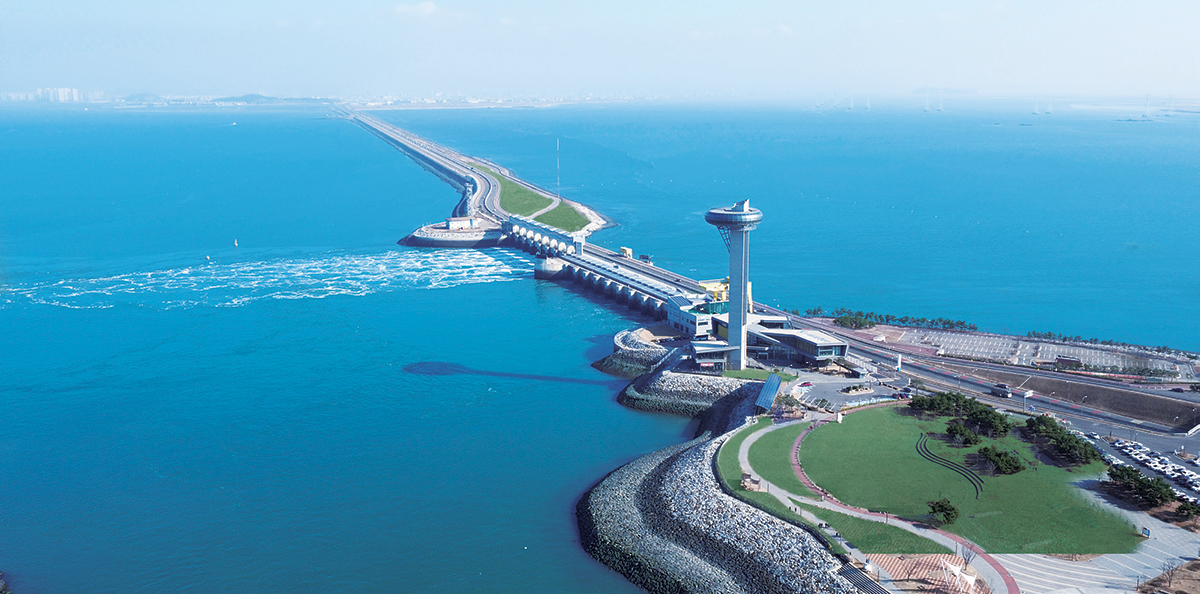
Tidal power generation is a form of clean energy that produces electricity by using the difference between high and low tides. The Sihwa Tidal Power Plant operated by K-water, the largest in the world, has a facility capacity of 254 MW and annual generation of 552 million kWh. It produces enough electricity to supply approximately 500,000 people for a year. Based on its operational expertise at the Sihwa facility, K-water is laying the foundation for a virtuous cycle wherein renewable energy attracts businesses and investment by expanding the Sihwa Tidal Power Plant and developing tidal power projects in the Saemangeum area.
Finally, pumped-storage hydropower is drawing attention as a key technology to mitigate the variability of renewable energy. Water is pumped up from a lower reservoir to an upper reservoir during periods of low electricity demand, and the stored water is released during peak demand to generate electricity by using hydraulic head. K-water plans to contribute to the government’s renewable energy transition by reviewing pumped-storage projects using existing dam infrastructure such as multipurpose dams and water supply dams.
Water Energy Transforming the Future
Renewable energy has now gone beyond simple power generation to become a key factor determining national competitiveness. In particular, stable and sustainable energy supply is becoming a critical criterion for industrial competitiveness as global companies increasingly demand RE100 compliance.
Beyond energy production, K-water is taking on the role of designing a new era of water energy. Moving forward, it plans to establish a foundation for transitioning from fossil fuel-centered systems to renewable energy-centered systems by combining dam-linked water energy production and RE100 industrial complexes. This will extend to the development of a national energy highway, the realization of K-RE100, and the expansion of regionally distributed energy systems, ultimately creating a more stable energy ecosystem.

2030 K-water Renewable Energy Deployment Targets

Unit (MW, cumulative)
Floating Solar
Power
Ground-mounted
Solar Power
Tidal Power Water Thermal
Energy
Pumped-storage Hydropower Hydropower, etc. Total
6,596 630 580 1,000 100 1,112 10,018
  • Floating Solar Power
    6,596
  • Ground-mounted
    Solar Power
    630
  • Tidal Power
    580
  • Water Thermal Energy
    1,000
  • Pumped-storage
    Hydropower
    100
  • Hydropower, etc.
    1,112
  • Total
    10,018

Interview The Era of Domestic Energy Made from Water

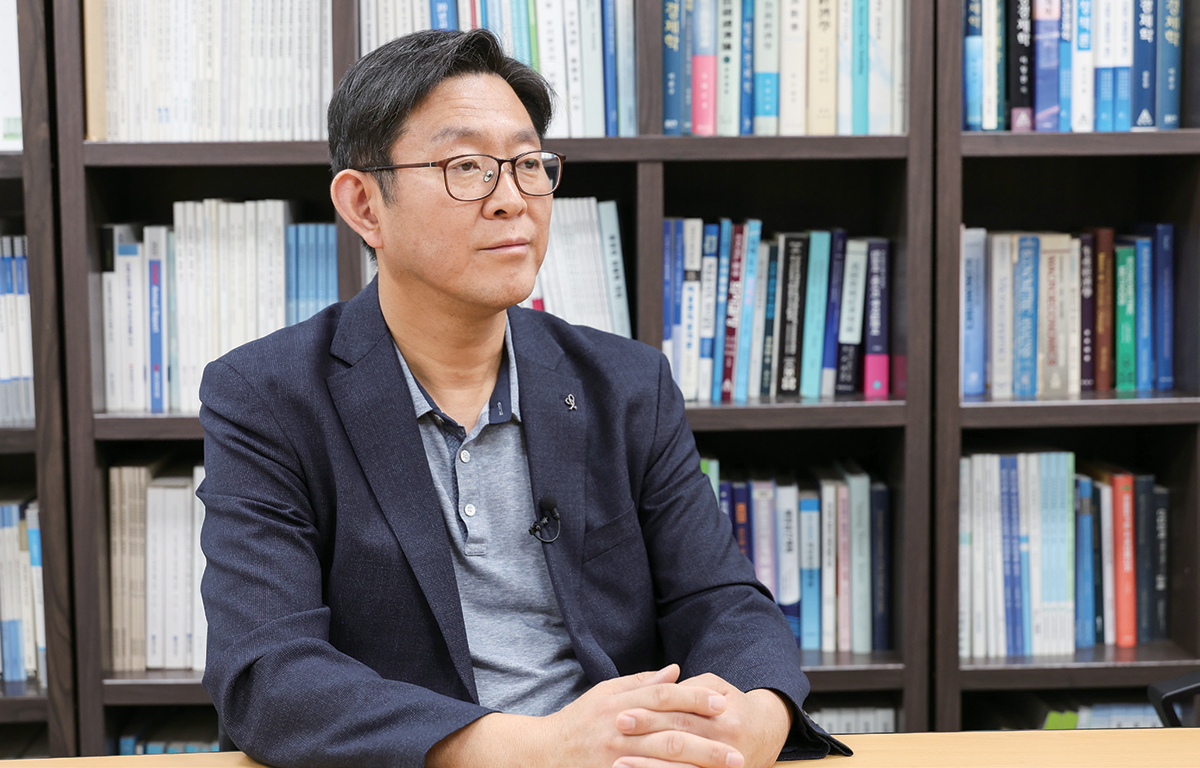
Seung-Hoon Yoo, Professor, Department of Future Energy Convergence, College of Creative Convergence Engineering, Seoul National University of Science and Technology

The global order is being reshaped from efficiency toward security. The recent situation in the Middle East has exposed vulnerabilities in energy supply chains, prompting the government to declare a major energy transition and accelerate the expansion of renewable energy. Amid these changes, water is drawing attention as a domestically available energy source. We spoke with Professor Seung-Hoon Yoo about the potential of water energy and the role of K-water.

  • As a public corporation specializing in water, K-water is expanding its scope to renewable energy. What is your view on this?

    Once carbon neutrality is fully implemented, electricity demand is expected to increase by 2.5 to 3.3 times the current level. Supplying this electricity cleanly and safely will require enormous costs, which may be difficult for private companies to bear alone. Ultimately, the role of public enterprises becomes crucial. Several public energy corporations are already fulfilling this role; it would be highly desirable if K-water joins them, bringing significant benefits to the public.

  • The transition to renewable energy is a long-term task. What needs to be in place to support it?

    There are two aspects. First, new dam projects are likely to be limited. Therefore, existing resources and infrastructure should be reorganized around water energy. Second, institutional and policy support at the central government level is necessary. The share of renewable energy has recently been increasing in public institution performance evaluations. As the organization responsible for managing national water resources, K-water has strong potential to receive positive evaluations as it can simultaneously contribute to carbon neutrality and stable energy supply.

  • Can dams go beyond water supply to become a foundation for regional growth through renewable energy?

    It is certainly possible, with Shinan and Haenam as representative examples. As a county consisting of numerous islands, Shinan shares profits from solar and wind power generation with residents, which has led to population inflow. The expectation of higher income and improved quality of life contributes to population growth and revitalization of the local economy. Haenam is achieving similar outcomes based on solar energy. Multipurpose dams can serve as infrastructure that not only provides water and flood control but also generates energy and shares benefits with local communities. Just as Shinan and Haenam created growth opportunities based on sunlight, regions with dams can achieve new growth based on water.

  • Why is floating solar power receiving particular attention?

    Conventional solar and wind power can impose a burden on forests or farmland depending on the location, and they are sometimes criticized for cutting down trees, which serve as carbon sinks. In contrast, floating solar uses the surface of multipurpose dams, thereby minimizing environmental damage. It is also efficient in terms of land use in a country with limited territory like Korea. As a highly desirable renewable energy model, it provides clean and stable electricity while sharing profits with local communities.

  • In the era of climate tech, can integrated capabilities in water and energy become a new growth driver?

    Yes. K-water has strengths not only in floating solar but also in various water energy fields such as tidal and water thermal energy.
    The Sihwa Tidal Power Plant can serve as an effective means of supporting RE100 initiatives by companies such as Samsung Electronics, and expansion of its supply capacity is currently under review. If necessary, tidal power in the Saemangeum area could also be promoted in cooperation with related organizations. Water thermal energy is a resource unique to K-water. It can play a key role in the climate tech era—particularly in applications such as data center cooling—by using water temperatures in dams and rivers.

  • What is needed for water thermal energy to become a key element in the AI and climate tech era?

    If the New and Renewable Energy Act is amended to grant REC (Renewable Energy Certificate) weighting to water thermal energy, project feasibility would improve significantly, and the entire water thermal industry would be revitalized.

  • Can we say that water energy is drawing global attention?

    Yes. Water energy is a key resource for producing clean electricity, and it will become an essential component of the future energy mix. Especially at a time when security is critical, water has the advantage of being a domestically producible energy resource. K-water, integrating hydropower, floating solar, tidal power, and water thermal energy, may eventually come to be known as a “Water Resources Energy Corporation,” reflecting the growing importance of water energy.

  • What tasks should K-water focus on, going forward?

    Until now, K-water has faithfully served its primary role of supplying water reliably. It should actively expand water energy, going forward. In the case of tidal power, Korea has many reclaimed lands, offering significant expansion potential. The significance would be even greater if the localization of core technologies and equipment such as power generation facilities and turbines can be achieved. K-water should also play a role in expanding pumped-storage hydropower using existing dam infrastructure, as it is an effective means of addressing the variability of renewable energy. Through this, it can make substantial contributions to the overall national energy system.

  • Any final remarks?

    This is a time when domestically produced energy is more important than ever. K-water is a “patriotic enterprise” capable of generating energy from domestic water resources without relying on overseas sources. I hope it will further expand this capability and its business scope to make even greater contributions to the nation and its people.