Since ancient times, Cheongju has been a fertile land where life can thrive. Mountain ranges stretching from the foothills of Songnisan Mountain embrace the city, with Musimcheon Stream and Mihogang River flowing like lifelines. Here, nature is not something to conquer, but a companion to breathe with and nurture together. From a zoo that awakens respect for life to a recreational forest that generously embraces visitors, we head to Cheongju where nature and humans deeply connect.
Text & Photos by. Woonsuk Lim, travel writer
Respect for Life: Cheongju Land Zoo
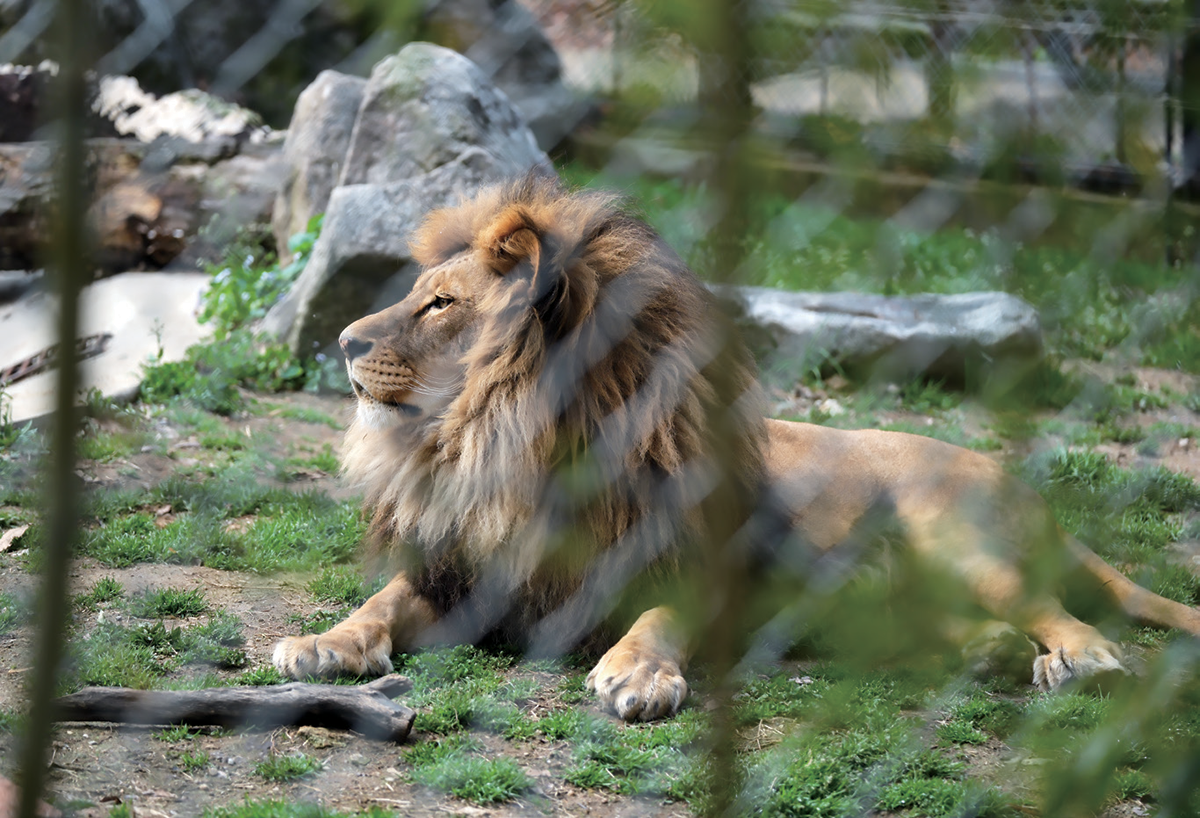
The first stop in Cheongju is Cheongju Land Zoo. Rather than offering flashy attractions or treating animals as exhibits, this place focuses on coexistence and healing. Following its designation as an ex-situ conservation institution in 2014, it has removed narrow cages and introduced nature-friendly enclosures and behavioral enrichment programs, prioritizing the natural instincts of animals.
Its sincerity is clearly seen in the story of Barami the lion. Known as the “rib lion,” Barami had been neglected for seven years on a concrete floor in a windowless private zoo, reduced to skin and bones. Only after being moved to Cheongju did he finally set foot on soil. With devoted care, Barami regained his health, formed a family with the lioness Dodo, and recently reunited with their daughter Gureumi, returning to a peaceful life. The eyes of Barami—having overcome horrific abuse to find rest—quietly convey the value of respecting life.
Walking through this place with children offers a meaningful opportunity to learn to treat life not as a spectacle, but as neighbors with whom we coexist.
Cheongju Land Zoo
A 171, Myeongam-ro, Sangdang-gu, Cheongju-si, Chungcheongbuk-do, Korea
T 043-201-4880
A Forest That Gives Generously: Okhwa Natural Recreation Forest and Midongsan Arboretum
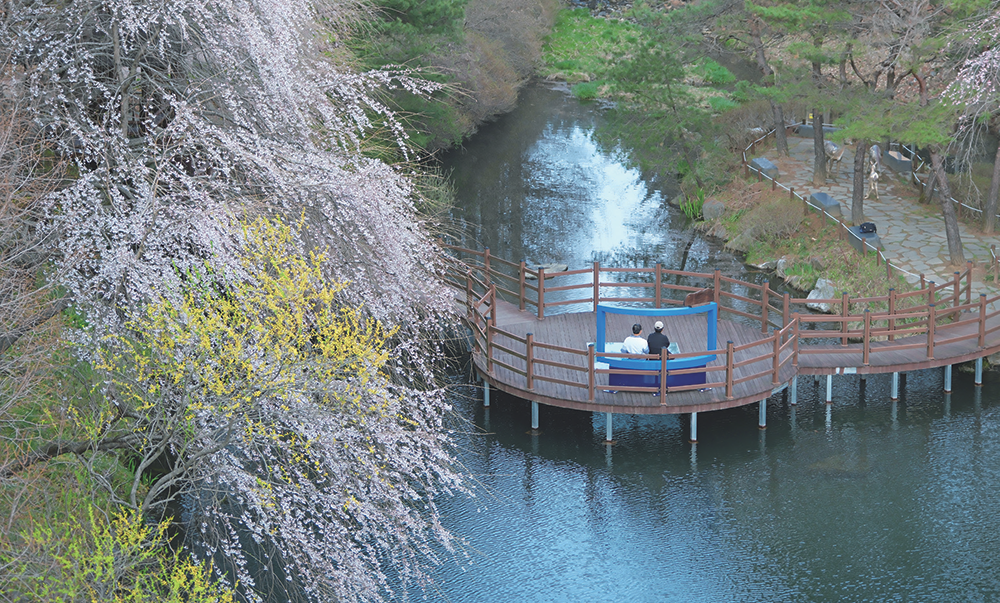
If you wish to escape the noise of the city, head to Okhwa Natural Recreation Forest. As one of Cheongju’s Nine Scenic Views of Okhwa, this place is a natural haven where dense forests and clear valleys come together. As you walk along the forest trails, phytoncides released by the trees envelop your body, and as you take time to reflect quietly, the tension of daily life gently fades away.
Within the forest, a special space called the Breeze Library brings together nature and books. Outdoor bookshelves nestled among lush trees and comfortable benches are designed solely for reading and contemplation. Turning the pages of a book while breathing in the fresh forest air makes for a unique retreat that awakens the five senses. With the sounds of wind and birds as background music, it is an ideal place to forget the noise of everyday life and connect more deeply with nature.
The forest is well-equipped for camping, too. Spending a night in a tent, listening to the sounds of the forest, and gazing at the stars create moments of deep emotional bonding with family and loved ones.
Nearby, Midongsan Arboretum showcases around 900 species and 700,000 plants each displaying its vitality, making it an ideal ecological learning site where the value of forests can be fully appreciated. For truly experiencing the arboretum, it is best to explore its themed gardens in sequence. Upon entering, visitors are first welcomed by Korea’s largest forest science museum: the Chungbuk Forest Science Museum. The route continues through the Tropical Plant House—where rare plants can be seen in one place—and the Butterfly Ecology Center where visitors can observe butterfly life cycles, leading to the Wood Culture Experience Center where one can touch and smell the textures of wood.
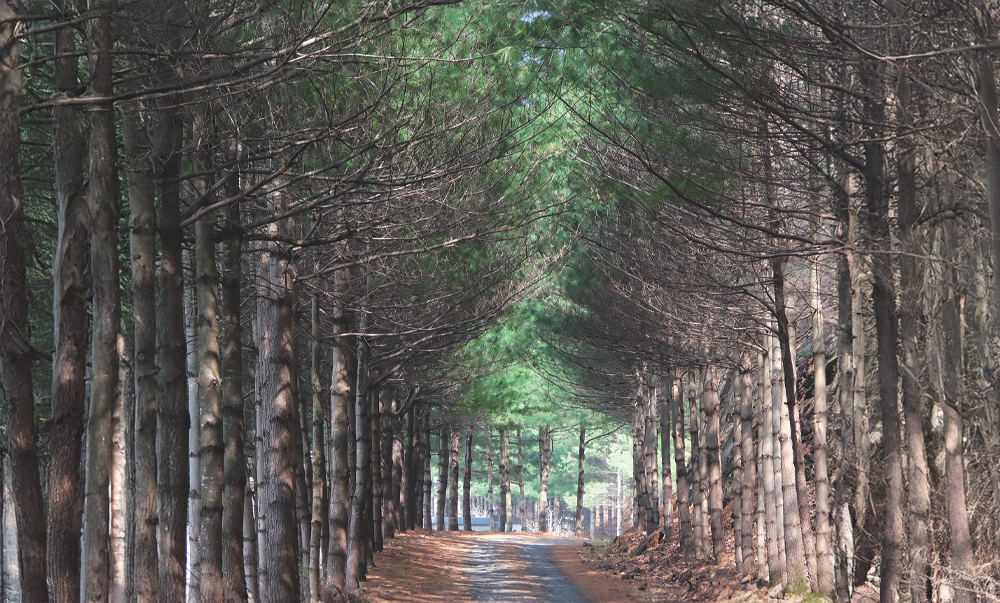
For a deeper immersion in the forest, the Forest Walking Trail is highly recommended. Stretching about 2 km, the metasequoia and maple-lined paths let visitors fully experience the forest’s ever-changing seasonal rhythms. Pausing at rest areas along the way and gazing at the scenery remind us that humans are also part of the forest.
Okhwa Natural Recreation Forest
A 140, Unamokhwa-gil, Miwon-myeon, Sangdang-gu, Cheongju-si, Chungcheongbuk-do, Korea
T 043-270-7384
Midongsan Arboretum
A 51, Sumogwon-gil, Miwon-myeon, Sangdang-gu, Cheongju-si, Chungcheongbuk-do, Korea
T 043-220-6101
The Breath of History and the View of the Sky: Cheongnamdae and Sangdangsanseong Fortress
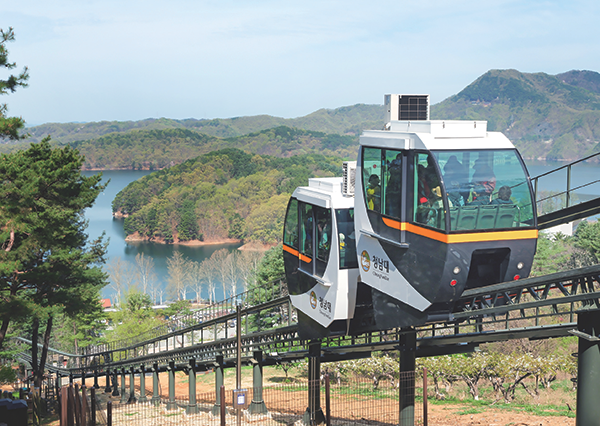
Cheongnamdae means The Blue House of the warm south. Once a secluded presidential retreat, it is now open to the public and popular as a premier eco-tourism destination. The gardens and walking paths set against the backdrop of Daecheongho Lake create a harmonious landscape shaped by both human hands and nature.
The recently introduced monorail offers a completely new perspective of Daecheongho. Visitors riding up to the observatory are greeted with a panoramic view of the majestic lake, which provides a refreshing sense of openness. The view from above broadens one’s perspective, with a healing effect that helps forget everyday worries.
For a touch of history, visit Sangdangsanseong Fortress, which dates back to the Baekje period and served as a key defensive stronghold during the Imjin War (Japanese Invasion of Korea, 1592–1598). Its current form was extensively rebuilt during the reign of King Sukjong of the Joseon Dynasty in 1716.
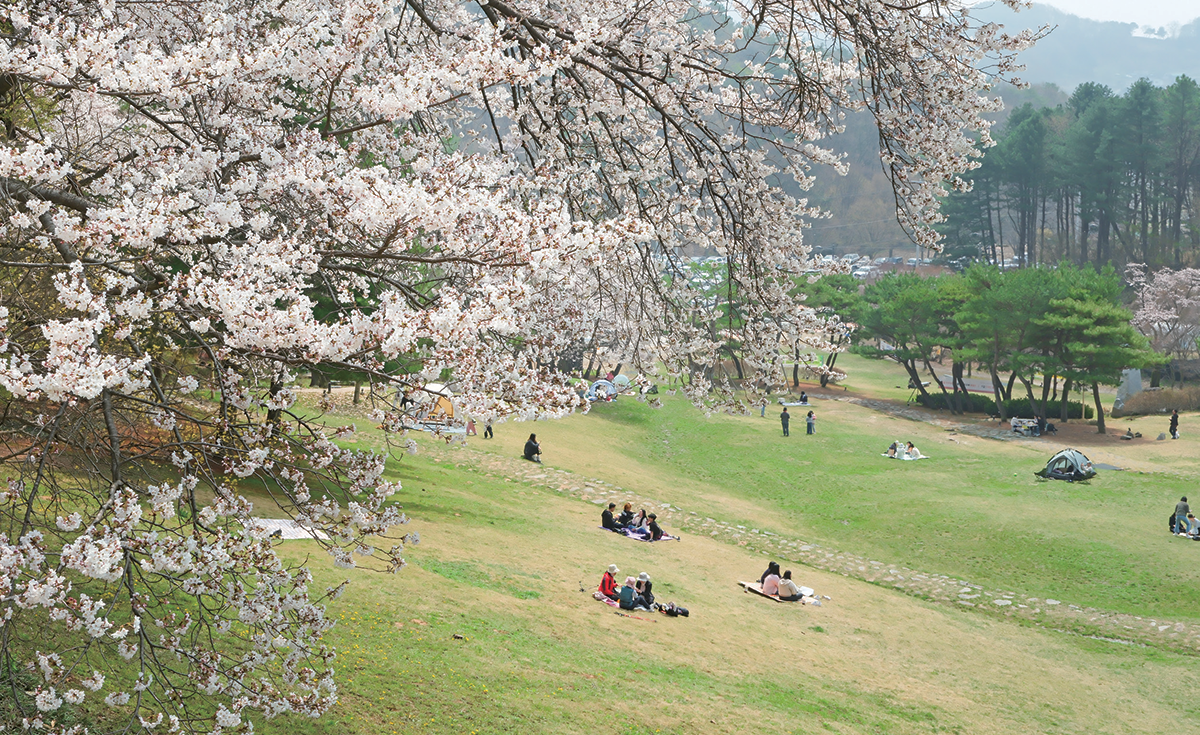
Today, the fortress has become a beloved natural retreat for Cheongju citizens. The expansive lawn in front of the South Gate (Gongnammun) is filled with families and couples enjoying picnics on weekends. A picnic against the backdrop of the fortress walls offers a sense of freedom rarely found in the city.
The fortress trail is also not to be missed. Spanning about 4.2 km, it forms a complete loop along the walls. The many gentle slopes enable even beginners to complete it in about 1.5 to 2 hours, making it a moderately easy course. Walking along the well-maintained path reveals a sweeping view of Cheongju below, while the winding fortress walls harmonizing with nature showcase the aesthetic sense and wisdom of our ancestors. The West Gate (Mihomun) that comes into view toward the end of the trail is the best sunset spot in Cheongju. When you stand there at dusk, the glowing sunset merging with the fortress walls creates a spectacular scene.
Cheongnamdae Monorail
A 646 Cheongnamdae-gil, Munui-myeon, Sangdang-gu, Cheongju-si, Chungcheongbuk-do, Korea
T 043-257-5080
Sangdangsanseong Fortress
A San 28-1, Sanseong-dong, Sangdang-gu, Cheongju-si, Chungcheongbuk-do, Korea Unridan-gil
Unridan-gil: Where Past and Present Meet
Uncheon-dong in Cheongju is a historic neighborhood home to Heungdeoksa Temple Site—where the world’s first metal movable type printing took place—and the Cheongju Early Printing Museum. Streets once lined with old houses and low buildings have transformed into a trendy area filled with stylish cafés, workshops, and bookstores—a street now known as Unridan-gil.
The charm of Unridan-gil lies in its evolution that respects the traces of time rather than artificial redevelopment. Craft-related shops reflecting Cheongju’s unique culture and art line the streets one after another, making it easy to see why it is considered the city’s top atmospheric and evocative travel destination.
If the forest offers communion with nature, the time spent on Unridan-gil is a form of social connection—linking people, past, and present. There is no better place to wrap up a journey in Cheongju than here, with a warm cup of coffee in hand.
When you need a place to rest your weary heart or wish to experience the vibrant energy of life, why not set off for Cheongju?
Unridan-gil
A Uncheon-dong, Heungdeok-gu, Cheongju-si, Chungcheongbuk-do, Korea (near the Cheongju Early Printing Museum)

 View previous
 이전호 보기