108% Performance Achieved in Unity with Residents
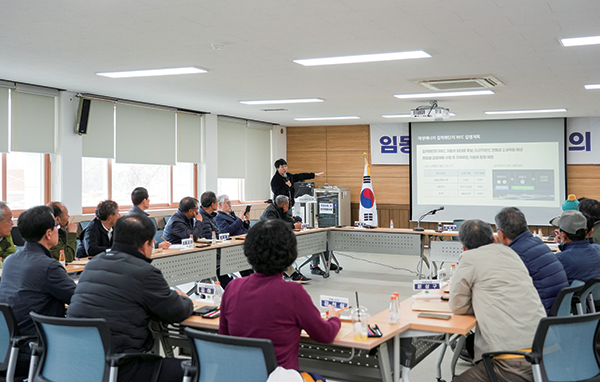
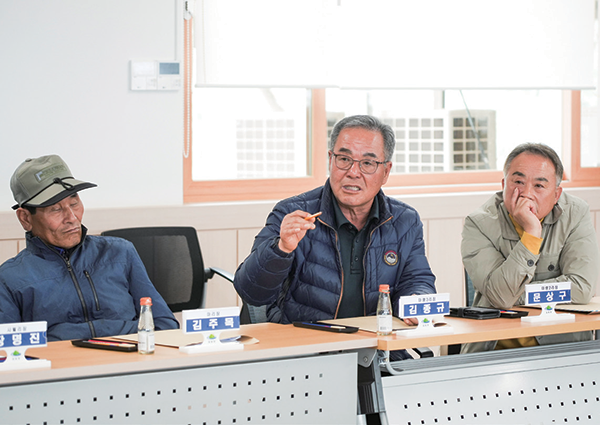
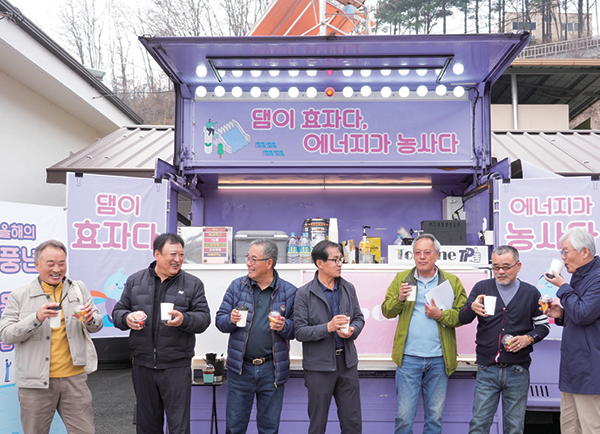
The heads of 22 villages gathered at the community service center in Imdong-myeon, Andong on March 25. Following the regular meeting of village leaders, a residents’ communication forum on the Imha Dam floating solar power project was held. The meeting room witnessed lively discussions as participants reviewed materials and exchanged views on the project.
During the forum, participants shared the outcomes of the project operation. “Since commencing commercial operation, the Imha Dam floating solar facility has been running stably, achieving approximately 108% of its planned generation target,” a representative from K-water explained, with attendees nodding in agreement. The project recorded approximately 24,971 MWh of electricity generation as of 2025, surpassing its target. Further increases in resident income are expected as well with the acquisition of Renewable Energy Certificate (REC) weighting based on its designation as a renewable energy cluster.
Discussions also extended to future landscape development plans. When a proposal to install nighttime illumination on the Taegeukgi (the national flag of Korea)-shaped solar facility on the dam’s surface was introduced, participants suggested creating viewing spaces as well. Village leaders expressed a strong consensus on the need to establish an environment where visitors can stay and enjoy the site.
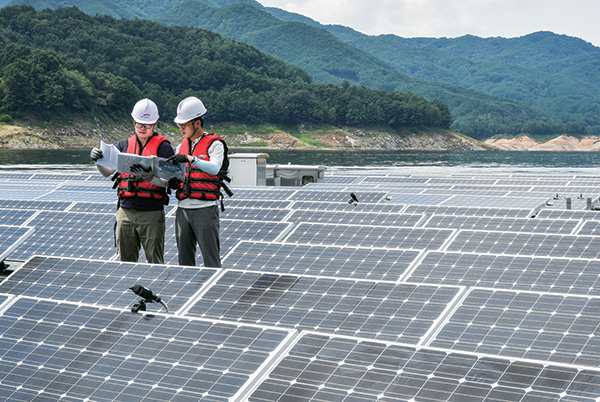
Hapcheon Dam Floating Solar Power Project
Chungju Dam Floating Solar Power Project
Residents at the Forefront of Energy Transition
The Imha Dam floating solar power project was designated in 2021 as Korea’s first renewable energy cluster. It has been promoted through a public-private partnership involving K-water, Gyeongsangbuk-do, Andong City, Korea Hydro & Nuclear Power, Korea Energy Agency, and local residents from Imdong-myeon and Imha-myeon.
Approximately 2,700 households across 33 villages established village corporations and directly participated in the project by purchasing bonds issued by a Special-Purpose Company (SPC).
This project represents a win-win regional model based on resident participation and benefit sharing. Positioning residents as key stakeholders in the transition to renewable energy has minimized potential conflicts surrounding the project while injecting economic vitality into the region; thus establishing a stable foundation for long-term operation.
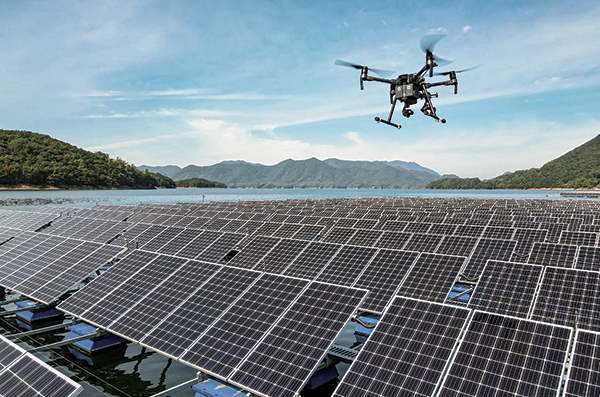
The 47.2 MW facility installed on the surface of Imha Lake commenced commercial operation in July 2025, and it is expected to generate 61,670 MWh of clean energy annually on average. The project is forecast to deliver approximately KRW 22.2 billion in support programs and resident income over a 20-year period.
Breaking Through Grid Constraints with “Cross-Transmission”
The Imha Dam floating solar power project overcame the limitation of grid saturation through an innovative “cross-transmission” approach. Initially, electricity generation was expected to be possible only after 2031 due to limited capacity in the local power grid. K-water focused on the idle periods within the hydropower transmission system and introduced a cross-transmission method—operating floating solar during daytime and hydropower at night. Power generation became feasible without additional infrastructure expansion by utilizing the existing transmission lines; thus advancing the start of commercial operation by approximately five years.
Despite the absence of prior regulatory frameworks or precedents, proactive consultations with the relevant authorities led to the first-ever approval of such cross-transmission method in Korea. This enabled earlier revenue generation and significantly shortened the timeline for distributing returns to residents. The case is expected to serve as a leading example of efficiently utilizing existing transmission infrastructure to address grid saturation, with potential for broader application across water energy projects.
The Imha Dam floating solar power project has now established itself as a representative model of “Mulbit Income,” where water-based energy is directly linked to local income generation. K-water is currently implementing floating solar power projects at Hapcheon Dam and Soyanggang Dam, focusing on profit-sharing with residents, and it plans to expand the “Mulbit Income” model to 17 locations nationwide by 2030; thus further advancing water energy-based regional development.
Mini-Interview
  • “An Equation for Success Built by Local Governments, Residents, and Institutions”

    Renewable Energy Team, Department of Regional Economy, Andong Team Leader Woo-jeong Nam

    The Imha Dam floating solar power project is a resident-participatory renewable energy initiative that delivers tangible benefits to local communities. The level of resident interest has been so strong that we continue to receive inquiries about the possibility of additional installations. Above all, resident acceptance is the key factor, and this project stands as a representative case wherein residents, Andong City, and relevant institutions worked toward a shared goal. Moving forward, we will continue to identify and review various development projects that can provide meaningful benefits to residents.

  • “From Opposition to Participation: Residents at the Forefront of Driving Change”

    Jungpyeong 1-ri Village Head & Chairman of Residents’ Consultative Body for the Imha Dam floating solar project Soon-cheol Kwon

    There was considerable opposition in the early stages of the project. Residents were concerned about the potential impacts on the surrounding landscape, as well as the possible effects on the aquatic ecosystem and local fishing livelihoods. Through dozens of rounds of discussions, consultations, and negotiations involving K-water, various institutions, Andong City, and residents, however, a consensus was ultimately reached. Now, residents view the project more positively as power generation revenues are being returned to the community. We hope it will continue to take root as a project that delivers real benefits to the region.

  • “A Model for Growing Together with the Community, Built on Trust”

    Energy Business Department, K-water Manager Dong-hun Choi

    The Imha Dam floating solar power project has exceeded its generation targets as of 2025, and we expect the profit-sharing arrangements promised to residents to proceed stably. As the first renewable energy cluster model of its kind, this project has established a positive cooperative framework wherein Andong City and local residents directly participate as partners. It represents a new standard for mutually beneficial development with local communities. The project has also attracted visits from other regions seeking benchmarking opportunities. Going forward, we will continue to communicate closely with residents and advance the project successfully based on mutual trust.