Seeds of Partnership Grow into Hope K-water’s Community Partnership Projects
Creating special moments when communities and people meet around water, when everyday life becomes a brand.
K-water continues to carry out diverse community partnership programs that connect the future of local communities through water. From the laughter of community sharing markets to the birth of local brands, the value of mutual prosperity is taking root through water.
Text & Photos by. K-water
A Market Connecting Communities and Hearts
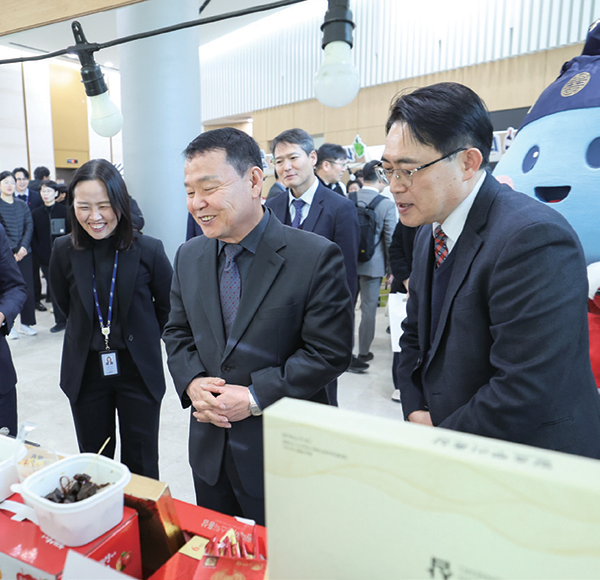
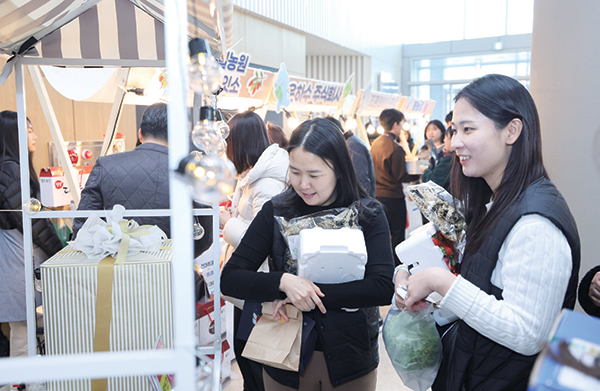
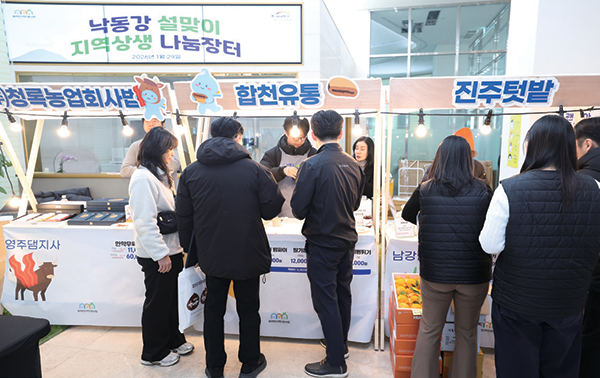
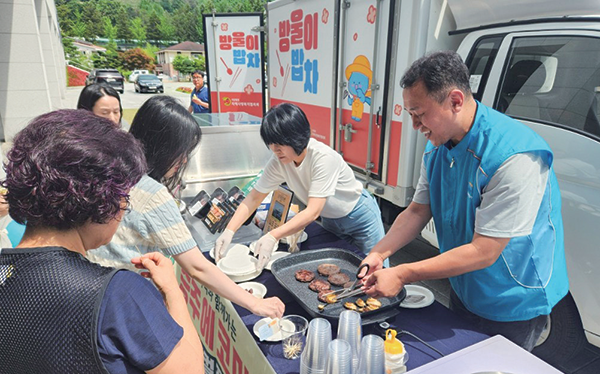
In the early morning hours of January 29, ahead of the Lunar New Year holidays, the lobby of the Nakdong River Basin Headquarters of K-water was filled with the vibrant, lively atmosphere of a bustling marketplace as farmers went about carefully arranging their displays, and employees purchased a variety of local agricultural specialties. It was the first “Community Sharing Market” of the year.
Since September 2023, K-water has been operating the “Sharing Market” to secure stable sales channels for local farms and to revitalize the regional economy. The program enables direct communication and transactions between employees and farmers. What began at the headquarters has now expanded to four basin headquarters and has become a flagship community partnership program. At this event, farmers and 11 local social enterprises from nine areas surrounding dams along the Nakdong River, including Cheongsong-gun in Gyeongsangbuk-do and Jinju in Gyeongsangnam-do, participated. A wide range of agricultural specialties produced directly by the participating farms and enterprises—such as apples, persimmons, traditional Korean sweets, and sesame oil—were gathered in one place. “The apples are better this year,” “These were picked just this morning,” declared the smiling farmers, naturally evoking the warmth of a traditional market.
Through this market, K-water purchased agricultural specialties worth KRW 25 million and delivered them to vulnerable people and social welfare institutions in villages near the dams, further boosting the spirit of sharing during the Lunar New Year holidays. K-water employees were able to purchase high-quality local products at reasonable prices, while farmers benefited from expanded sales channels and increased revenues, and K-water achieved tangible outcomes from sharing with the local community. It was a day when partnership was truly realized.
Support Projects Involving Communities around Dams
Fostering Mutual Prosperity with Dam-Area Communities
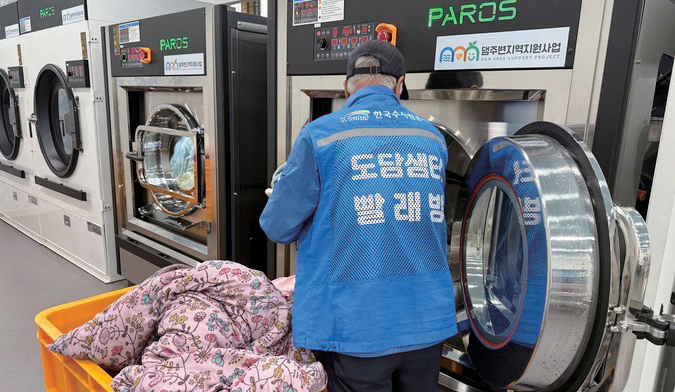
K-water’s commitment to mutual prosperity does not end with a one-day event. Since 1990, it has continuously implemented a variety of support projects aimed at increasing the income and improving the welfare of residents living near dams. Currently, it is carrying out customized support projects that reflect local conditions and needs for seventy-one local governments and people living in areas around thirty-seven dams nationwide, including livelihood assistance services and mobile medical bus operations. These efforts have helped to enhance the quality of life for local communities while promoting sustainable regional development.
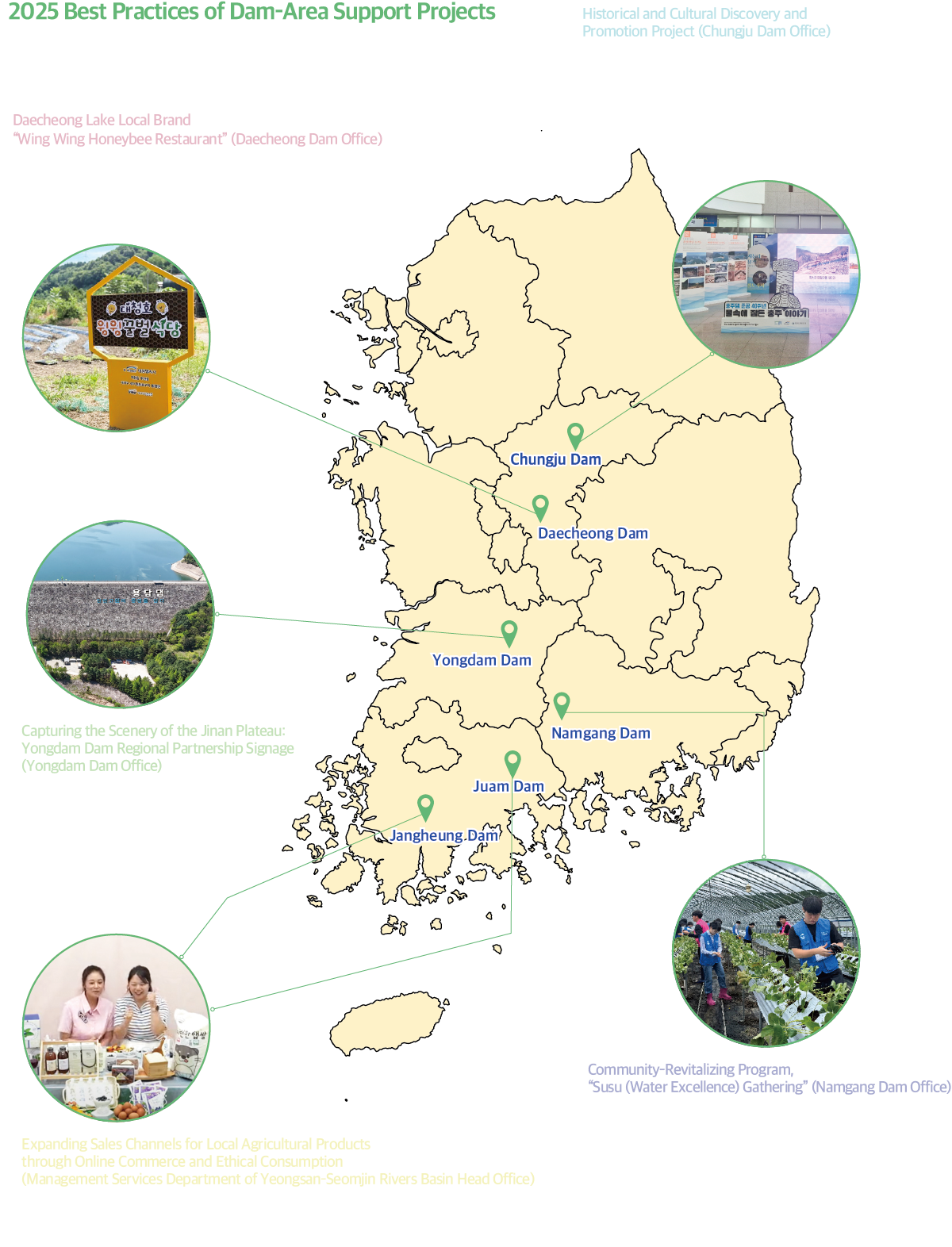
Last year was no exception as a variety of support projects were promoted in dam areas—including Juam Dam, Daecheong Dam, Namgang Dam, Chungju Dam, and Yongdam Dam—to foster mutual prosperity with local communities. In particular, online marketplaces were operated in the Yeongsan River and Seomjin River basins in a bid to expand the sales channels for farmers and establish the basis for stable incomes. Furthermore, the connections that began in offline markets were extended to the online domain, thereby contributing to the revitalization of the regional economy.
“Dam Local Branding”: Cultivating Regional Potential into Brands
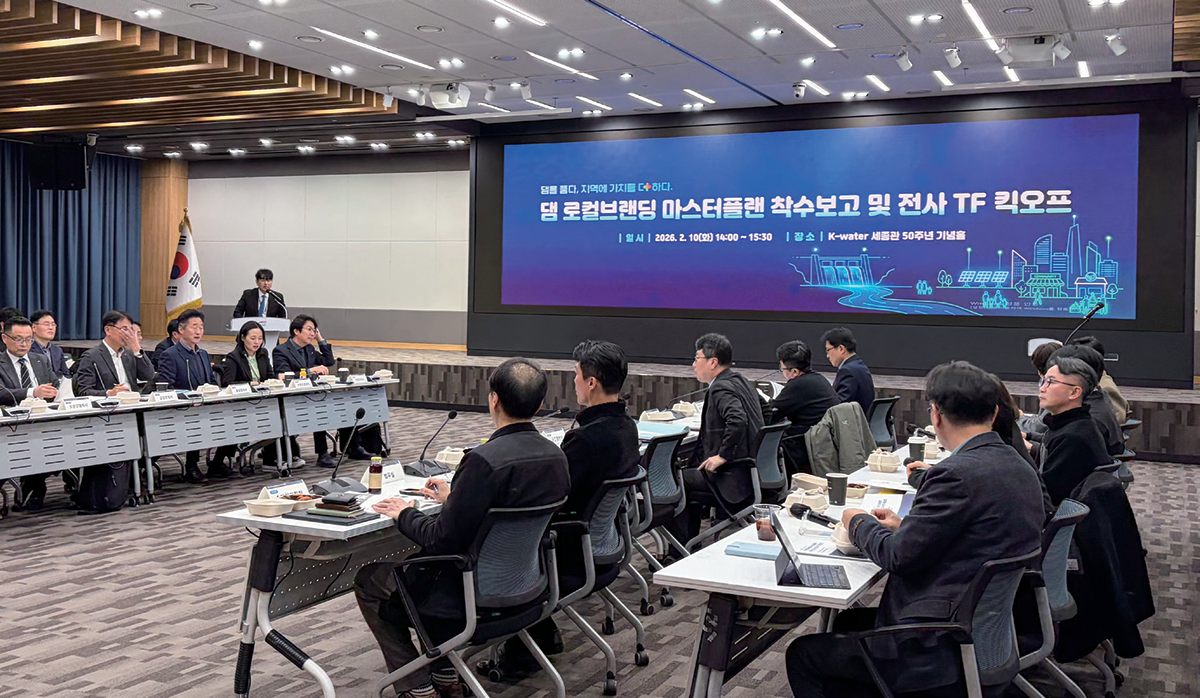
Last year saw the launch of a new initiative named “Dam Local Branding,” a regional partnership project that aims to create new businesses and local brands by combining the excellent waterfront spaces around dams with the unique cultures of the respective regions. With the participation of local governments, residents, and private enterprises, the initiative aims to foster differentiated brands and establish long-term revenue models, ultimately encouraging population inflow and increasing the revenues of local communities.
In May last year, twelve local governments near ten dams submitted fifteen proposals in response to a project appeal, from which just three were finally selected: Yanggu-gun in Gangwon-do, Andong in Gyeongsangbuk-do, and Jinan-gun in Jeollabuk-do. The three selected communities have since begun preparing master plans that reflect regional characteristics and are pressing ahead with the project in earnest. Each local government is crystallizing sustainable business models, including the creation of customized RE100 villages that will utilize waterfront spaces, waterfront tourism projects, and the operation of local markets. In addition, they plan to develop region-specific contents into storytelling programs and expand them into festivals linked with waterfront spaces, injecting a fresh dose of vitality into their communities.
Dam Local Branding ultimately represents an attempt to transform the excellent waterfront environments of dams into new opportunities for the regions concerned. By converting spaces where water is gathered into places where people, industries, and culture converge, the strategy seeks to cultivate local resources into competitive brands and expand regional narratives into compelling contents, thereby laying the foundation for a self-sustaining regional economy. Through these changes, K-water aims to establish a structure that will enable it to create value together with local communities and share the achievements, steadily expanding a new partnership of coexistence centered on dams.

 View previous
 이전호 보기