The power of K-water industry grabs the world’s attention at CES 2026
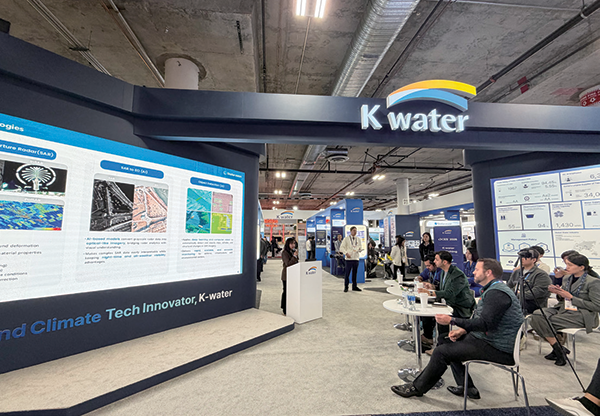
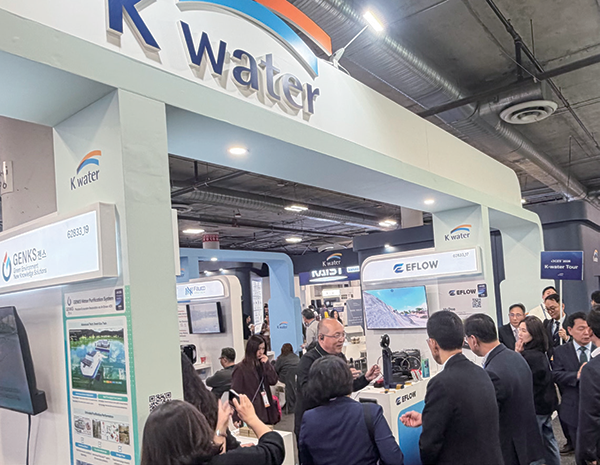
"CES 2026," the global festival where innovative technologies from around the world converge, was held in Las Vegas, USA. At this year's CES, K-water captured global attention with its "AI water management technology." This article features the K-water exhibition hall that showcased the power of the K-water industry at CES 2026.
Text by. Editorial Team Photos by. K-water & each company
K-water industry further sharpens its competitive edge with AI innovation technologies
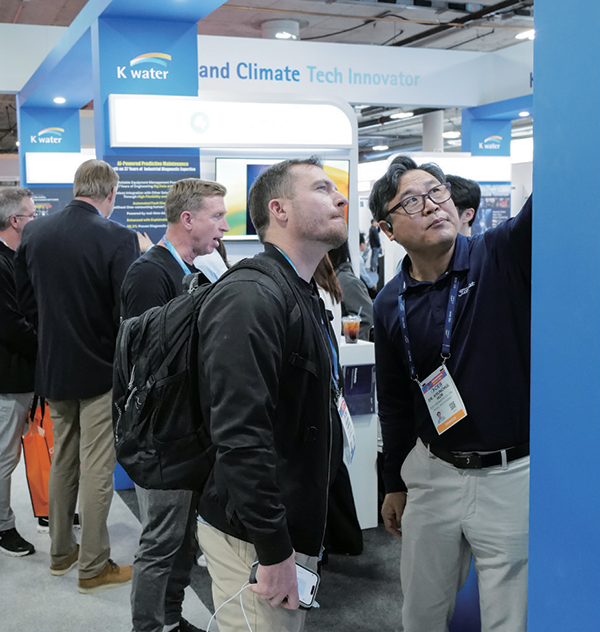
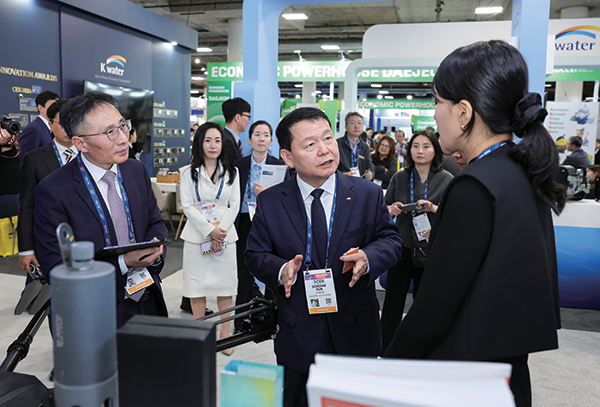
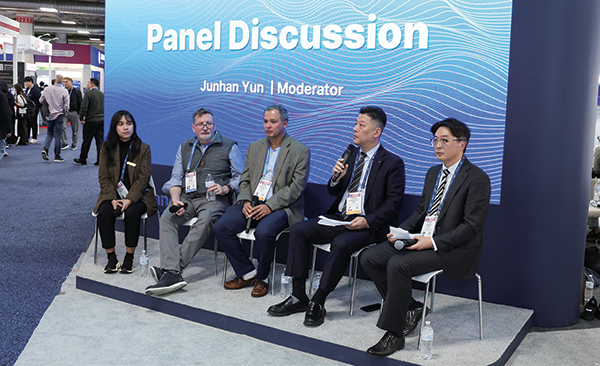
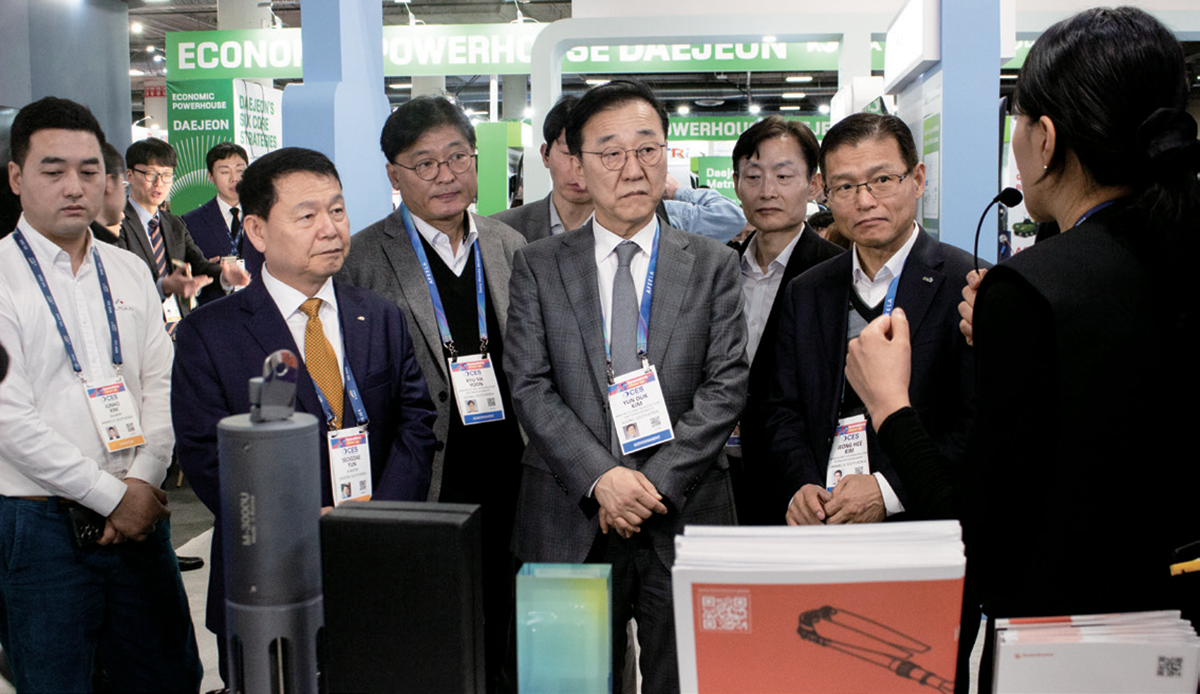
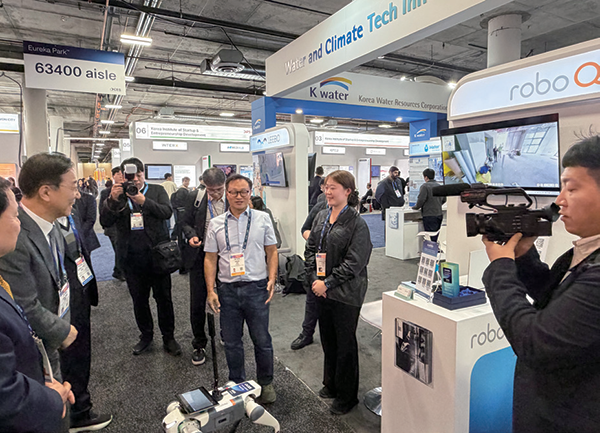
"CES 2026" was held in Las Vegas, USA from January 6 to 9. Themed “The Rise of Innovators,” the exhibition brought together more than 4,100 companies from over 160 countries. K-water set up the "K-water Pavilion" at Eureka Park together with 21 innovative domestic water sector companies, presenting Korea’s water management technologies to the global market that is being reshaped around AI.
The core is "AI water management." To respond to increasingly unpredictable weather variables and water management environments, K-water combined 60 years of its accumulated operational experience and 7.4 billion data points per day with AI. This allows K-water to increase prediction accuracy and strengthen the resilience of water infrastructure, presenting a new water management paradigm that protects citizens’ daily lives better.
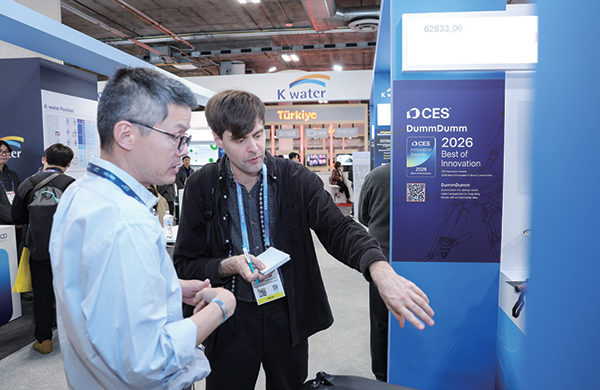
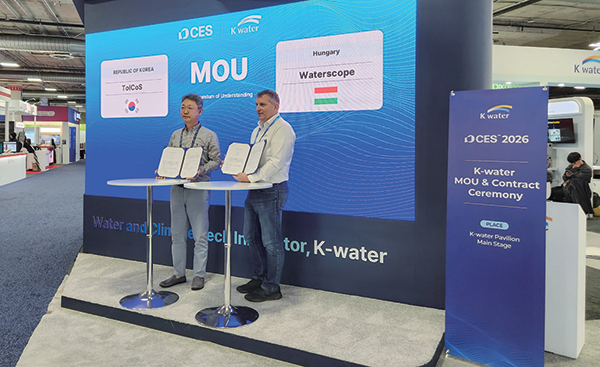
The results were also clear. As the public sector’s AI transformation capabilities and experience in fostering the water industry ecosystem meshed with the technological strengths of private startups, a remarkable feat was achieved: 1 out of the 21 participating companies won the Best of Innovation Award, and 6 companies bagged Innovation Awards. Export and investment consultations totaling USD 89 million (approximately KRW 130 billion) were also concluded in more than 520 cases, reaffirming CES as a business stage directly linked to exports.
“The water industry is emerging as a key industry that will determine future national competitiveness by combining with AI technology. We will continue to provide effective support so that the potential of the K-water industry as proven at this year’s CES can become one of the pillars of Korea’s economic growth and further contribute to Korea’s leap to becoming an AI powerhouse,” said Seogdae Yun, CEO of K-water.
Best of Innovation Award
Drone-based water technology DoomDoom proven on the global stage
Could you please introduce your company?
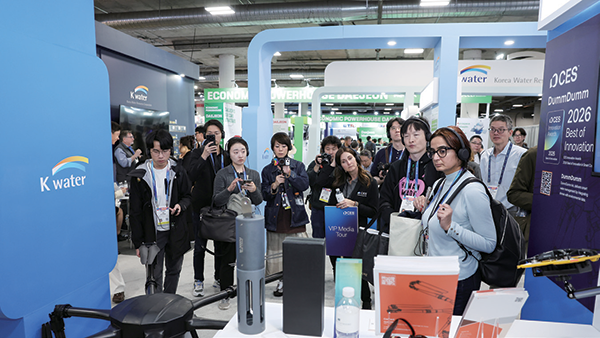
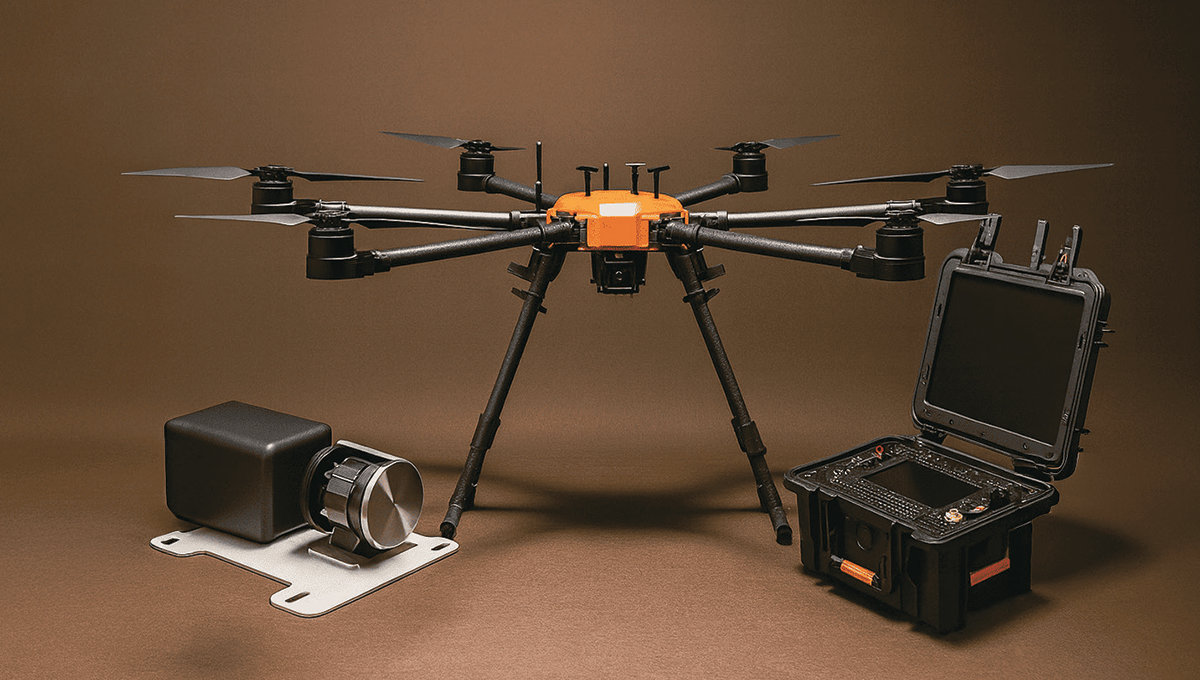
DoomDoom is a drone technology company that develops drone-based environmental solutions. Centered on the "Hydro Hawk–5G Smart Water Sampling Drone System," it is advancing technologies for automated water sampling and remote water quality monitoring. It secures data safely and efficiently even in waters that are difficult for people to access by combining 5G communication, remote control, and precision sampling technologies, aiming for the digital transformation of water resource management.
How do you feel about winning the CES 2026 Best of Innovation Award?
We are very honored to receive the Best of Innovation Award. This award is meaningful since our technology has been recognized not merely as drone technology, but as an innovation capable of changing the way water resources are managed. We feel both joy and responsibility in the sense that the potential of advanced technologies in the environmental and public sectors has been recognized on the international stage.
Tell us more about the award-winning product.
The "Hydro Hawk–5G Smart Water Sampling Drone System" is a 5G-based drone solution that performs remote automated water sampling and enables real-time verification of the collected data through a water quality monitoring system. Existing water quality surveys were manpower-centered, requiring on-site access that involved significant safety risks and time and cost burdens. To address this, we combined drone-based automated sampling technology and real-time communication.
The biggest advantage is that sampling is possible without the need for people to access hazardous areas. For example, in a control environment in Seoul, missions can be assigned to drones on-site in Jeju to perform remote sampling operations. In addition, target-layer samples can be collected without turbidity by precisely controlling the opening and closing of samplers at pre-set points, and survey efficiency as well as data repeatability and reproducibility have been improved through automation.
Are there any demonstration cases being conducted with K-water?
There are no specific demonstration cases at present, but discussions to conduct future demonstration projects are underway. We plan to link with K-water’s water quality management tasks such as regular water quality surveys of dams and reservoirs, monitoring of hard-to-access areas, rapid on-site data acquisition in the event of accidents, and management of wide water areas.
Innovation Award
Mobilio, AI robot recognized by the world
Could you please introduce Mobilio?
Mobilio is an artificial intelligence robot platform company founded in 2020. We develop robot solutions that solve problems at industrial sites through physical AI technology that combines robot hardware and AI software. We aim to realize intelligent robots that can independently think and act in the real world by developing both the robot’s “body” and “brain.” The company is headquartered in Pangyo Techno Valley and operates overseas bases in Virginia, USA, and Nagasaki, Japan, as it seeks to expand into the global market.
Which product won the CES 2026 Innovation Award?
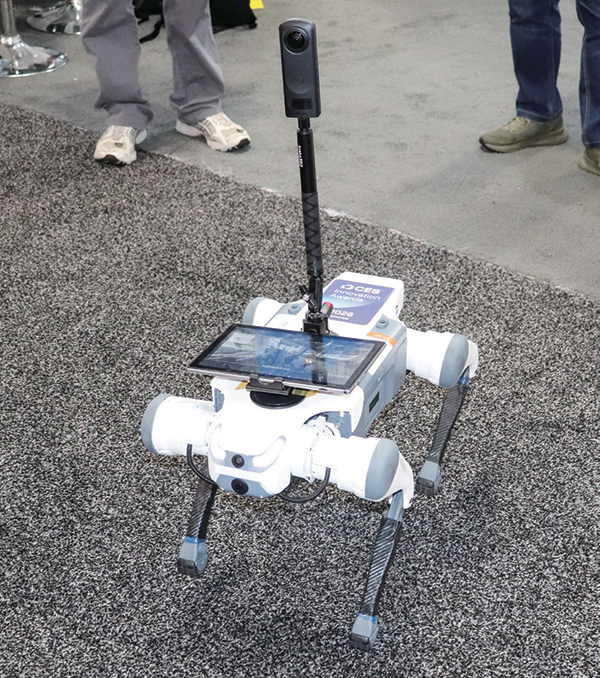
The award-winning product NaviGate X is an intelligent monitoring robot solution that integrates precision control of quadruped and humanoid robots into autonomous inspections of industrial sites.
Using a 360-degree camera mounted on the robot, it recreates the site as a real-time digital twin and maximizes autonomy through technology that enables the robot to find optimal routes and move on its own even inside complex facilities. This allows users to manage multiple robots and sensors in real time through a single web-based console.
In particular, NaviGate X has successfully completed PoCs (proofs of concept) in construction sites, heavy industries, factories, and logistics centers where robot adoption had been difficult, and it is currently in actual operation at sites including global company C, recording high degrees of satisfaction. It won the CES 2026 Innovation Award in recognition of these feats, which empirically demonstrated the automation of the entire inspection process in high-risk industrial environments to prevent safety accidents and improve operational efficiency.
As a partner company of K-water, what support did you receive?
We received multifaceted support from K-water, ranging from exhibitions and commercialization to demonstrations. Through customized education, consulting, and mentoring, we received help in introducing our technologies and establishing business strategies aligned with global standards; thanks to the "K-water Joint Pavilion" set up at Eureka Park at CES 2026, we secured stable exhibition space and promotional opportunities. On-site support covering booth operations up to buyer consultations was also a great help.
Innovation Award
Hylab: Innovation Distributed Hydrogen Energy
Could you please introduce Hylab?
Hylab is a company that develops next-generation hydrogen energy solutions. A total of 24 members work together as a team across three countries—Korea, Germany, the United States—and ultimately pursue “freedom from energy infrastructure.” In an era marked by climate change, frequent disasters, and growing energy insecurity, the belief that we need to achieve a transition to “distributed energy systems that produce and use as much energy as needed on-site” led to the development of HyDee (Hydrogen will set you free).
Tell us more about the product that won the CES 2026 Innovation Award.
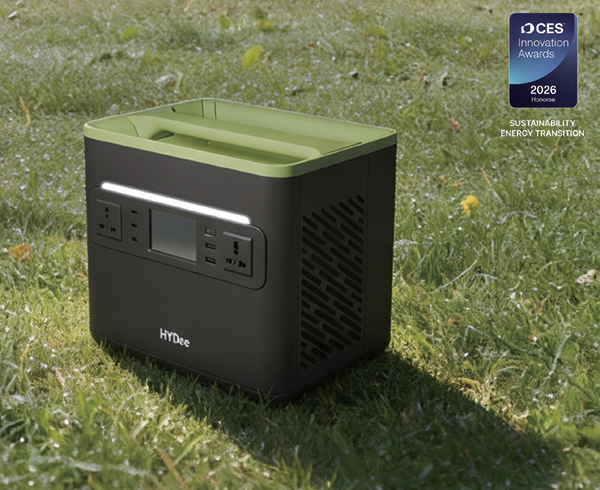
The product that won the Innovation Award is "HyDee." It is a solution designed to enable power use wherever needed without the burden of transmission lines, noise, or fuel supply, integrating hydrogen fuel cell stacks, power conversion, and thermal management systems into an optimized package. In particular, the innovation we emphasize lies in realizing complex technologies into a simple user experience.
In addition, HOASIS is a system that implements—on a small-scale, on-site basis—the cycle of producing hydrogen through water electrolysis (electrolysis) and generating electricity again by feeding hydrogen into fuel cells (fuel cells). As a result, installation conditions are easier than those of large-scale plants, and hydrogen produced anywhere water flows can be supplied to HyDee or stored.
You mentioned that collaboration with K-water has special meaning. Could you please elaborate on that?
Collaboration with K-water has special meaning for us. Water and energy are the two pillars of civilization, and great synergy is realized at the point where the two meet. This is exactly where HyDee and HOASIS shine when combined.
First, they can supplement the lack of power at water quality monitoring sites. Using HyDee allows precision analysis equipment to be operated for long periods and real-time data transmission systems to be run stably, resulting in high utilization rates even in extreme environments such as cold waves and heat waves.
Second, they enable energy independence for remote facilities. Producing hydropower-based hydrogen with HOASIS and supplying it to HyDee enable stable power supply and when combined with solar power, it can be expanded to a renewable energy self-sufficiency model.
Furthermore, if HOASIS is installed at key water systems such as weirs, dams, and waterways to produce green hydrogen, and if this is linked to power supply for nearby water treatment facilities and regional hydrogen charging stations, the possibility of expanding its role as a key player in the national energy transition also opens for K-water.

 View previous
 이전호 보기