
 View previous
 이전호 보기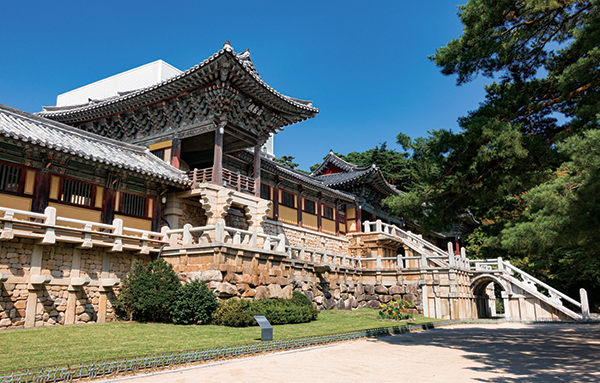
Bulguksa is not just a temple. It is closer to an ideological structure that embodies the ideal world envisioned by the people of Unified Silla through stone, wood, and spatial order. Bulguksa was built during the Unified Silla period and is regarded as a representative example of translating state-level Buddhist ideology into architecture. The main buildings and stone relics that remain today were designated as UNESCO World Heritage together with Seokguram Grotto in 1995. In particular, Dabotap Pagoda and Seokgatap Pagoda constitute a rare case of two Buddhist pagodas of different forms and meanings coexisting in a single space. Bulguksa welcomes visitors with open arms as a comprehensive cultural heritage integrating Silla politics, philosophy, and aesthetics beyond the boundaries of a religious heritage.
Bulguksa is not just a temple. It is closer to an ideological structure that embodies the ideal world envisioned by the people of Unified Silla through stone, wood, and spatial order. Bulguksa was built during the Unified Silla period and is regarded as a representative example of translating state-level Buddhist ideology into architecture. The main buildings and stone relics that remain today were designated as UNESCO World Heritage together with Seokguram Grotto in 1995. In particular, Dabotap Pagoda and Seokgatap Pagoda constitute a rare case of two Buddhist pagodas of different forms and meanings coexisting in a single space. Bulguksa welcomes visitors with open arms as a comprehensive cultural heritage integrating Silla politics, philosophy, and aesthetics beyond the boundaries of a religious heritage.
- A 385 Bulguk-ro, Gyeongju-si, Gyeongsangbuk-do
- H 09:00~18:00
- F Free (separate fee for Bulguksa Museum / Parking KRW 2,000)
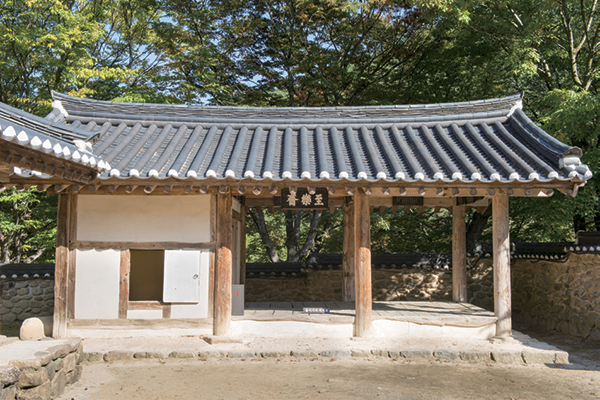
As Korea’s first seowon (Confucian academy), Sosu Seowon embodies both an attitude toward learning and an approach to space. After its predecessor Baegundong Seowon was built in 1543, it was granted the name “Sosu” meaning “to restore and continue collapsed teachings” by King Myeongjong and has been known by that name ever since. Sosu Seowon became the model for seowon across the country after its construction and influenced Confucian education as well as the formation of local intellectual communities. As the prototype of a Confucian cultural space where architecture, education, and nature come together in harmony, it has a layout wherein the lecture hall (Ganghakdang) as an educational space, shrine (Sawu), walls, and forests flow naturally into one another, showing that learning was not separated from daily life. It was listed as UNESCO World Heritage in 2019 under the collective title “Seowon, Korean Neo-Confucian Academies” together with other seowon.
As Korea’s first seowon (Confucian academy), Sosu Seowon embodies both an attitude toward learning and an approach to space. After its predecessor Baegundong Seowon was built in 1543, it was granted the name “Sosu” meaning “to restore and continue collapsed teachings” by King Myeongjong and has been known by that name ever since. Sosu Seowon became the model for seowon across the country after its construction and influenced Confucian education as well as the formation of local intellectual communities. As the prototype of a Confucian cultural space where architecture, education, and nature come together in harmony, it has a layout wherein the lecture hall (Ganghakdang) as an educational space, shrine (Sawu), walls, and forests flow naturally into one another, showing that learning was not separated from daily life. It was listed as UNESCO World Heritage in 2019 under the collective title “Seowon, Korean Neo-Confucian Academies” together with other seowon.
- A 2740 Sobaek-ro, Sunheung-myeon, Yeongju-si, Gyeongsangbuk-do
- H 09:00~18:00 (09:00~17:00 during winter)
- F KRW 2,000 for adults, KRW 1,330 for youth / KRW 660 for children
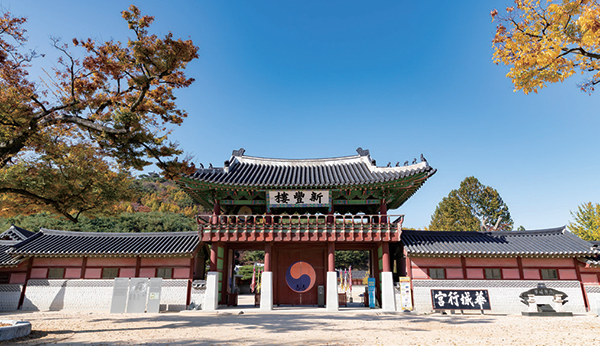
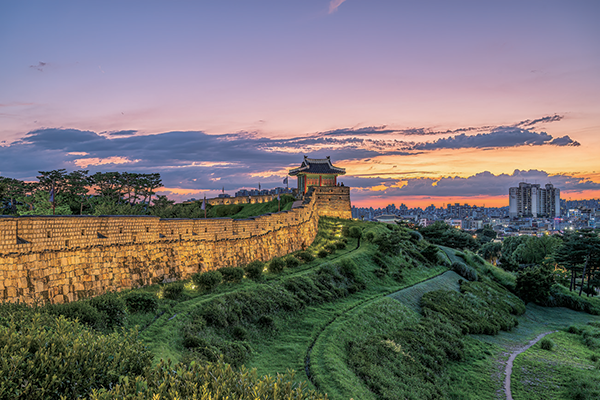
Hwaseong Fortress goes beyond the conventional concept of a “fortress for defense.” Conceived by King Jeongjo during the Joseon Dynasty, this fortress was a military facility, an administrative city, and a living space for the people as well. Walking along the walls connecting Janganmun Gate and Paldalmun Gate, you will notice the flexible design that embraces the natural terrain. Hwaseong Fortress was completed in a short period of two years and nine months from 1794 to 1796 and is also famous for its construction using scientific technologies such as the Geojunggi crane devised by Jeong Yak-yong. Combining Eastern and Western fortress techniques, its structure shows the direction of reform politics in late Joseon, said to mark the beginning of modern Korean architecture. It was inscribed as UNESCO World Heritage in 1997, gaining international recognition for its value.
- A 320-2 Yeonghwa-dong, Jangan-gu, Suwon-si, Gyeonggi-do
- H 09:00~18:00
- F KRW 1,000 for adults / KRW 500 for children
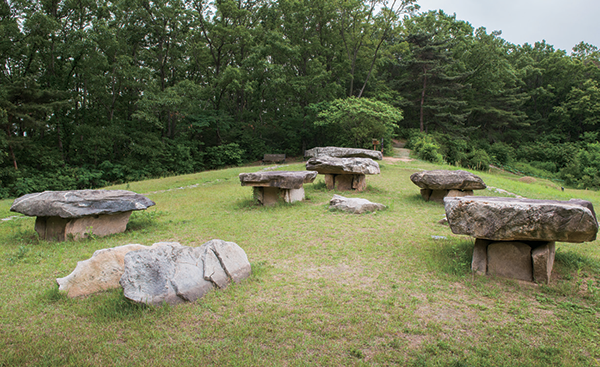
People of the Bronze Age erected massive stones to leave behind memories of life, death, and community. Reminiscent of Stonehenge in England, the Ganghwa Dolmen Sites capture attention first not through explanation, but through the sheer presence of the stones themselves. Their overwhelming size and weight—and the time it must have taken to move them—leave a powerful impression. The sites are estimated to have been constructed around 1,000 BCE. As a central area of dolmen culture on the Korean Peninsula, the dolmens in Ganghwa are largely in table-type form and are valued as important materials showing stages in the development of power structures and social organization. The dolmen sites of Ganghwa, Gochang, and Hwasun were jointly listed as UNESCO World Heritage in 2000 and are precious legacies for understanding prehistoric burial culture and community consciousness.
People of the Bronze Age erected massive stones to leave behind memories of life, death, and community. Reminiscent of Stonehenge in England, the Ganghwa Dolmen Sites capture attention first not through explanation, but through the sheer presence of the stones themselves. Their overwhelming size and weight—and the time it must have taken to move them—leave a powerful impression. The sites are estimated to have been constructed around 1,000 BCE. As a central area of dolmen culture on the Korean Peninsula, the dolmens in Ganghwa are largely in table-type form and are valued as important materials showing stages in the development of power structures and social organization. The dolmen sites of Ganghwa, Gochang, and Hwasun were jointly listed as UNESCO World Heritage in 2000 and are precious legacies for understanding prehistoric burial culture and community consciousness.
- A 330-2 Bugeun-ri, Hajomyeon, Ganghwa-gun, Incheon
- H open all year round
- F Free