
 View previous
 이전호 보기
 -
- Finding a Solution to Water Scarcity from the Sea
-
Water demand continues to rise amid the accelerating global population growth and industrialization. In particular, the expansion of hi-tech industries such as semiconductors and artificial intelligence (AI) has caused water consumption to increase exponentially. In addition, climate change is causing more frequent and severe droughts, making it difficult to ensure stable water supply with the existing dam- and river-centered water supply systems. Against this backdrop, global interest in alternative water resources to address global water shortage is increasing. The seawater desalination market is growing rapidly, especially in water-scarce regions such as the Middle East and North Africa.
About 97% of the Earth’s water is seawater. Freshwater constitutes only about 3%, and only approximately 0.3% of the Earth’s total water is suitable for human use. Seawater desalination technology removes salts and other substances from seawater to make it usable freshwater. Since the water source is virtually limitless and unaffected by changes in rainfall patterns caused by climate change, it allows stable water supply.
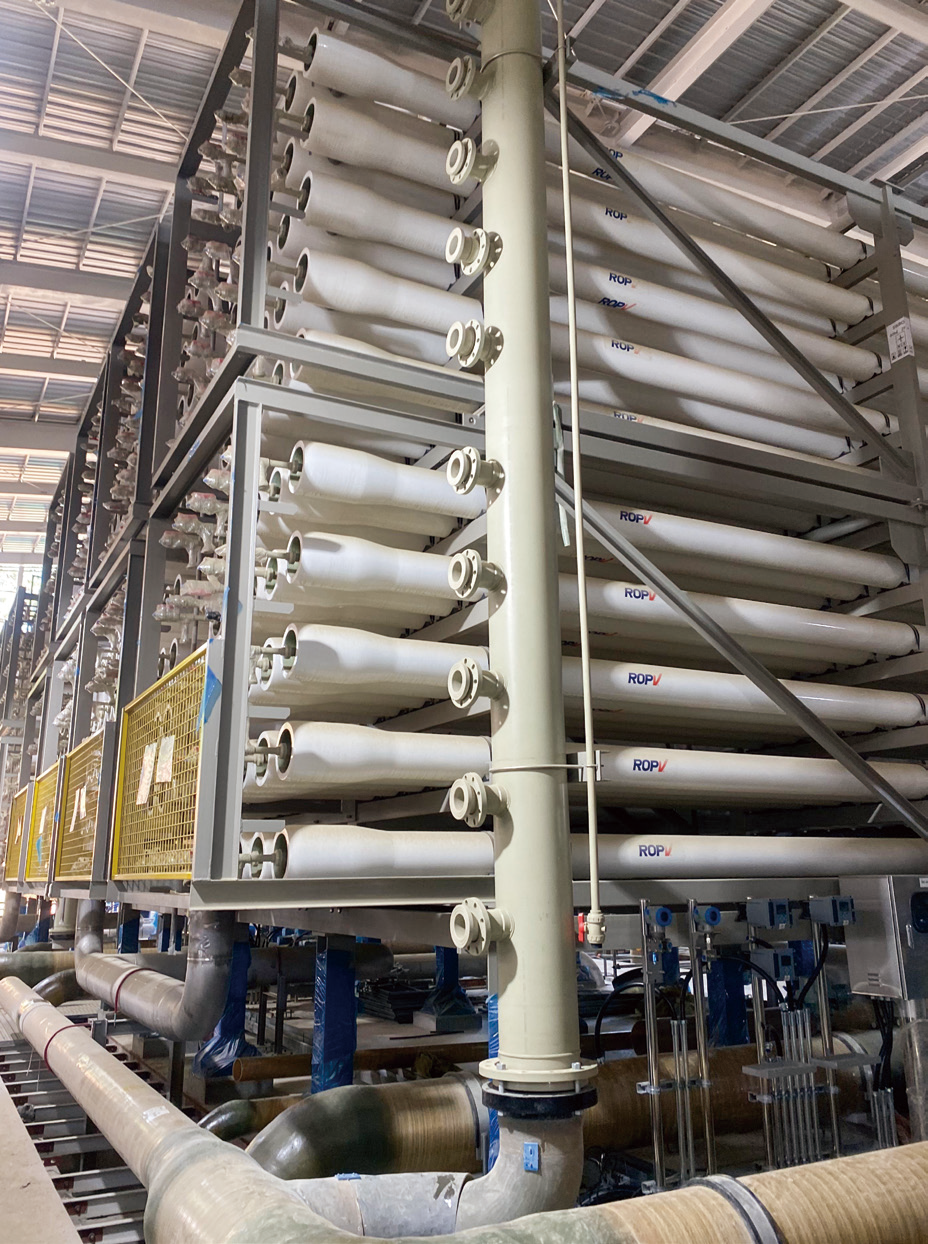
The first-generation technology of converting seawater into freshwater is the “evaporation method,” which boils seawater and condenses the steam to obtain freshwater. Since this method consumes a large amount of energy to boil water, however, the “Reverse Osmosis (RO) membrane method” has recently become the standard. In the RO membrane method, water naturally moves from low to high concentration due to osmotic pressure. By applying higher pressure than the osmotic pressure to seawater, only desalinated water excluding salts and ionic substances passes through the semipermeable membrane; thus producing clean freshwater. RO is more energy-efficient and cost-effective compared to the evaporation method, so most desalination plants worldwide now use it.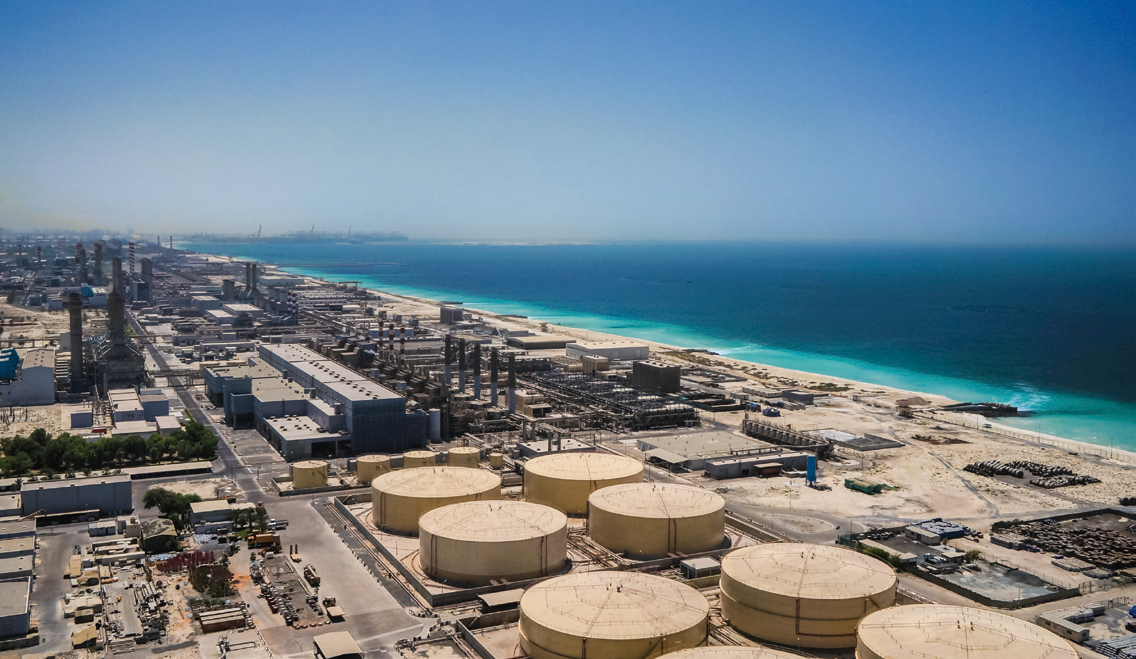
-
- Seawater Desalination: A Key Technology for Climate Change Adaptation
-
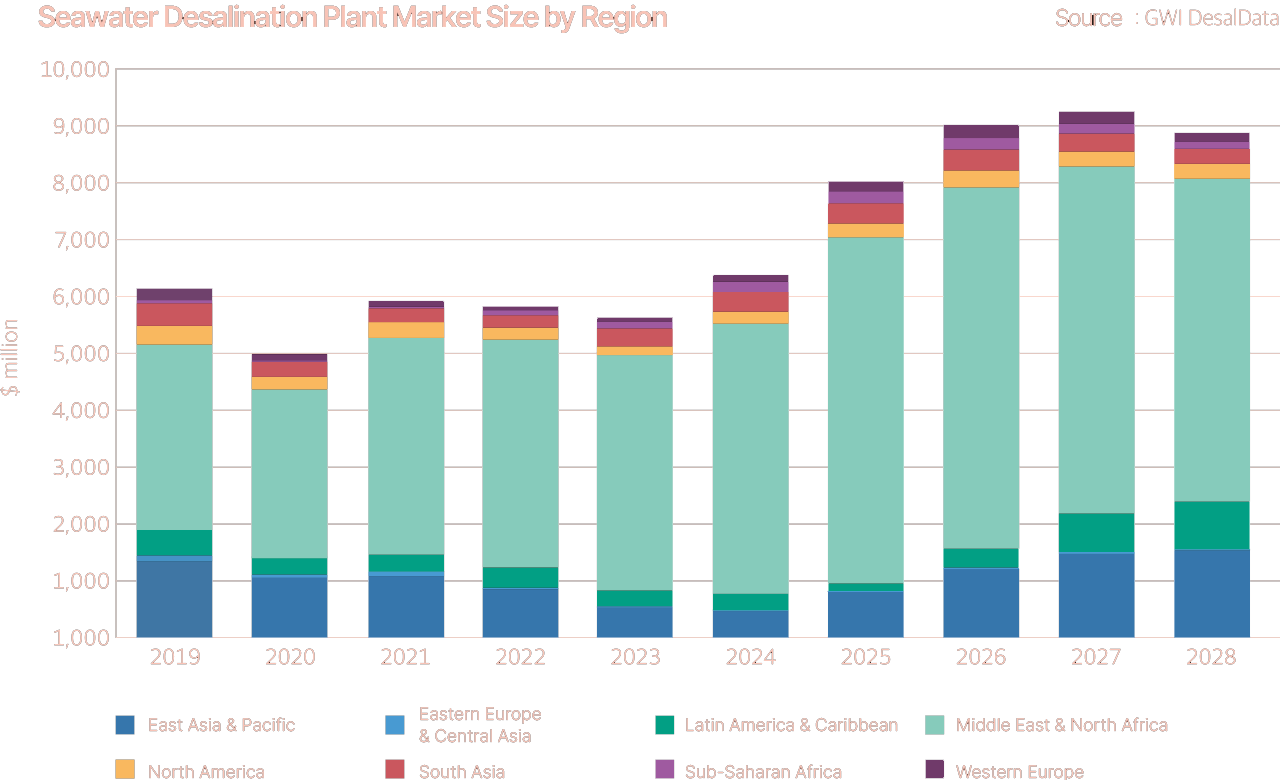
According to the desalination market report published by Global Water Intelligence (GWI), the market size is expected to reach USD 82.6 billion from 2021 to 2025 (an annual average of approximately USD 16.5 billion) and USD 71.1 billion from 2026 to 2028 (an annual average of approximately USD 23.7 billion), for an average annual growth of 5.6%. This rapid growth clearly shows that seawater desalination technology is emerging as a key strategy for sustainable water supply amid population growth, industrialization, and climate change-induced scarcity of inland water resources.
In contrast to the rapid growth of the global desalination market, Korea’s seawater desalination market is still in its early stages. Most desalination facilities in Korea are small-scale plants with capacities of less than 100 m³/day, primarily supplying water to island regions. Medium- to large-scale facilities with capacities of over 1,000 m³/day are limited to three sites: Gwangyang POSCO (30,000 m³/day), Busan Gijang-gun (45,000 m³/day), and Daesan Coastal Industrial Complex. Among these, the Daesan Coastal Industrial Complex seawater desalination facility—scheduled for completion by the end of this year—is the largest and first commercial-scale seawater desalination plant in Korea, showcasing K-water’s technology and construction management capabilities through state-of-the-art construction methods and smart construction safety technologies throughout the entire process from design to construction. -
-
- Daesan Coastal Industrial Complex Seawater Desalination Project to Address Long-standing Water Scarcity in Western Chungnam Region
-
Along with Ulsan and Yeosu, Daesan Coastal Industrial Complex is one of Korea’s three major petrochemical complexes where stable water supply is crucial for operating industrial facilities. However, eight cities and counties in Western Chungnam rely mostly on Boryeong Dam with insufficient alternative water sources; hence the chronic water shortages. In addition, Daehoji, which is used by tenant companies as their own water source, suffers from unstable intake during repeated droughts, and supply to industrial users is restricted when reservoir levels fall below 20%. Nearby Sapgyoho and Asanho also have no surplus water for intake.
Against this backdrop, the Daesan Coastal Industrial Complex Seawater Desalination Project was initiated. Located in Daesan-eup, Seosan-si, Chungnam, the project involves constructing a desalination plant with a daily capacity of 100,000 m³ and requires a total investment of KRW 317.5 billion. This includes one intake facility and 24.9 km of intake, transmission, and discharge pipelines. The plan is to draw 224,000 m³ of seawater daily, purify it at the plant, and supply 100,000 m³ of freshwater to the complex. Tenant companies can ensure stable production, and water previously allocated for industrial use can be redistributed to local communities for domestic use; thus strengthening the overall water supply stability in Western Chungnam.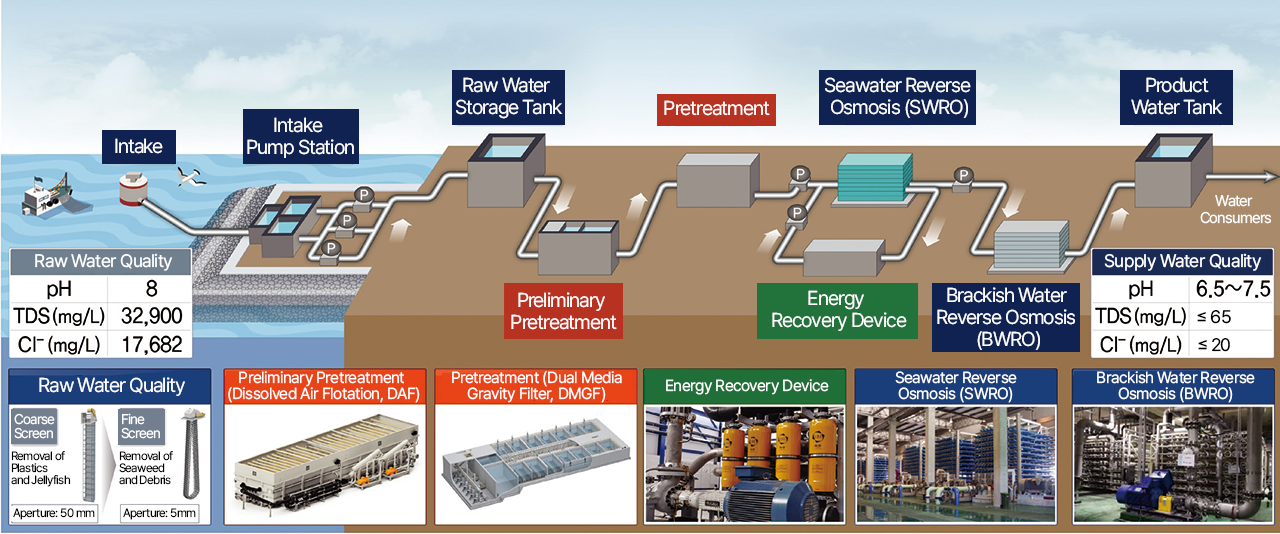
Daesan Seawater Desalination Process Flow Diagram
-
- Advanced Seawater Desalination Technology Strengthens National Water Security and Supports Water Industry Growth
-
Water shortages caused by climate change directly affect industrial growth and daily life. Seawater desalination with its inexhaustible water source is a practical alternative, and it can serve as a strategic asset supporting national water security. However, desalination technology consumes more energy than other water treatment processes. In response, K-water is developing energy-saving and eco-friendly technologies to improve operational efficiency and economic viability while enhancing global competitiveness.
First, K-water is working diligently on developing energy-saving technology through diversified water sources. Energy consumption can be reduced by mixing low-salinity water such as lake water, wastewater, or discharge water with seawater and using it as feedwater for the seawater desalination plant. Since the use of mixed water sources may accelerate RO membrane contamination, however, research is underway to find an optimal balance for economic feasibility. Technologies are also being developed to reduce environmental impacts and reuse concentrated brine as a resource. The concentrated brine generated in the desalination process has high salinity and various ionic components. Using this high-concentration brine as an electrolyte allows the production of low-concentration sodium hypochlorite, and research is actively being conducted to produce high-value minerals such as magnesium and lithium. Meanwhile, substituting the produced sodium hypochlorite for the chemical (commercial bleach) used in the intake process in desalination plants can reduce production costs while minimizing impacts on the marine ecosystem. In addition, efforts are being made to develop related innovative technologies including reuse of thermal discharge water and optimization of process operations.
Extreme droughts and floods due to climate change, along with the limitations of existing freshwater resources, are major challenges facing our society. The combination of climate-adaptive water management policies and advanced water technology will be key to sustainable development. The advancements in seawater desalination technology and the successful operation of Daesan Coastal Plant will strengthen Korea’s water supply foundation and enhance the global competitiveness of the national water industry.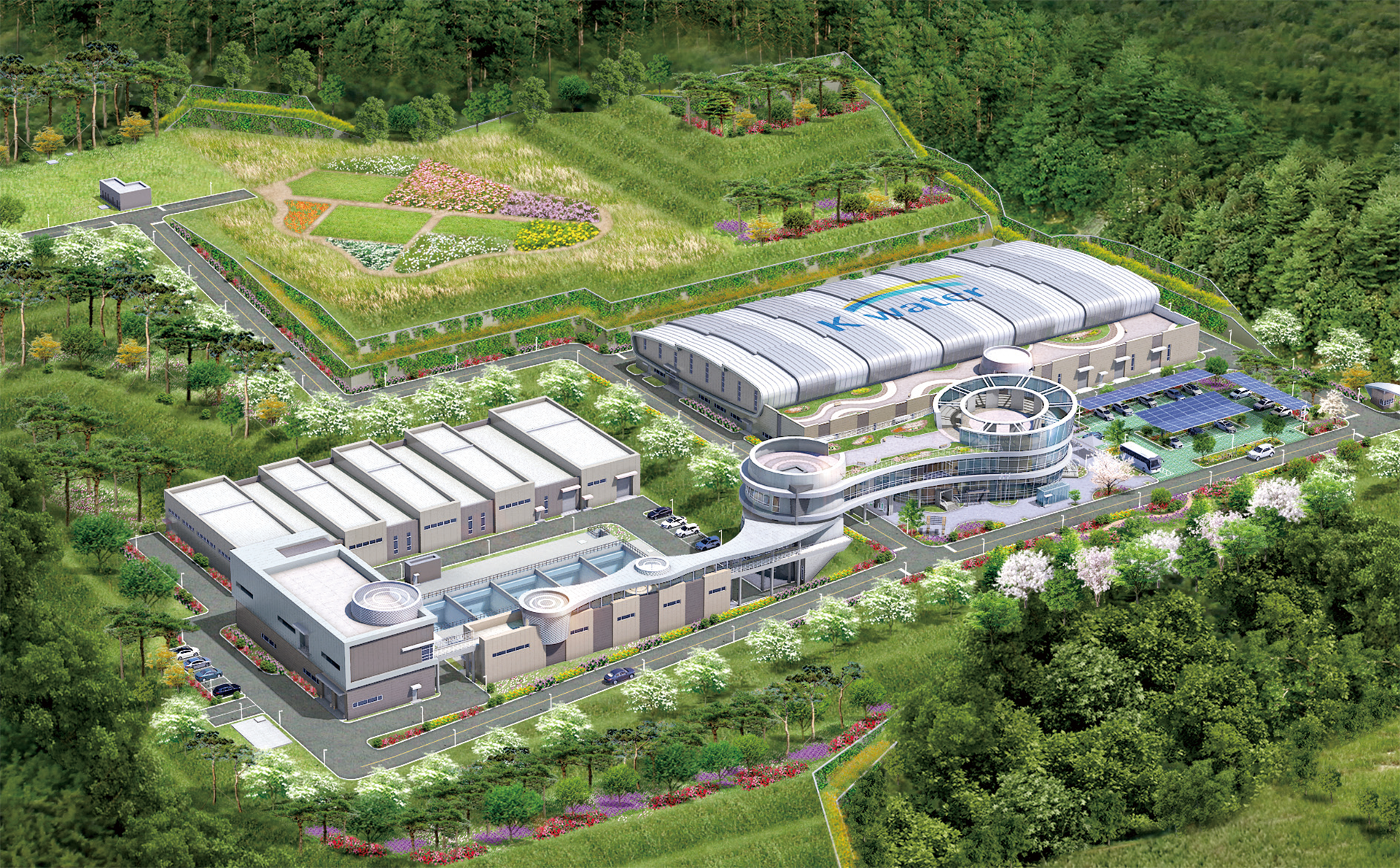
Perspective View of Daesan Seawater Desalination Plant